Introduction
Motorcycle brakes are among the most important parts of a motorcycle because they help riders control speed and stop safely. Whether someone rides a motorcycle for daily travel, long distance journeys, or occasional trips, understanding the main motorcycle brake parts can help with regular maintenance and safer riding.
A motorcycle braking system contains several components that work together to slow down or stop the wheels. These components may include brake levers, brake cables, brake pads, brake discs, brake calipers, brake shoes, and brake drums. The exact parts depend on whether the motorcycle uses disc brakes, drum brakes, or a combination of both.
Learning about motorcycle brake parts and their functions also makes it easier to identify problems before they become serious. In this guide, I will explain the major components of a motorcycle braking system and how each part contributes to safe braking.
What Is a Motorcycle Braking System?
A motorcycle braking system is a group of mechanical or hydraulic components that reduce wheel speed when the rider applies the brakes. Most motorcycles have separate front and rear brakes, allowing the rider to control braking according to road conditions.
The front brake generally provides a large share of the stopping force during firm braking because weight shifts toward the front wheel as the motorcycle slows down. The rear brake helps maintain stability and supports controlled deceleration.
Some motorcycles use disc brakes on both wheels, while others use a front disc brake and a rear drum brake. Smaller and older motorcycles may use drum brakes at both ends.
1. Brake Lever
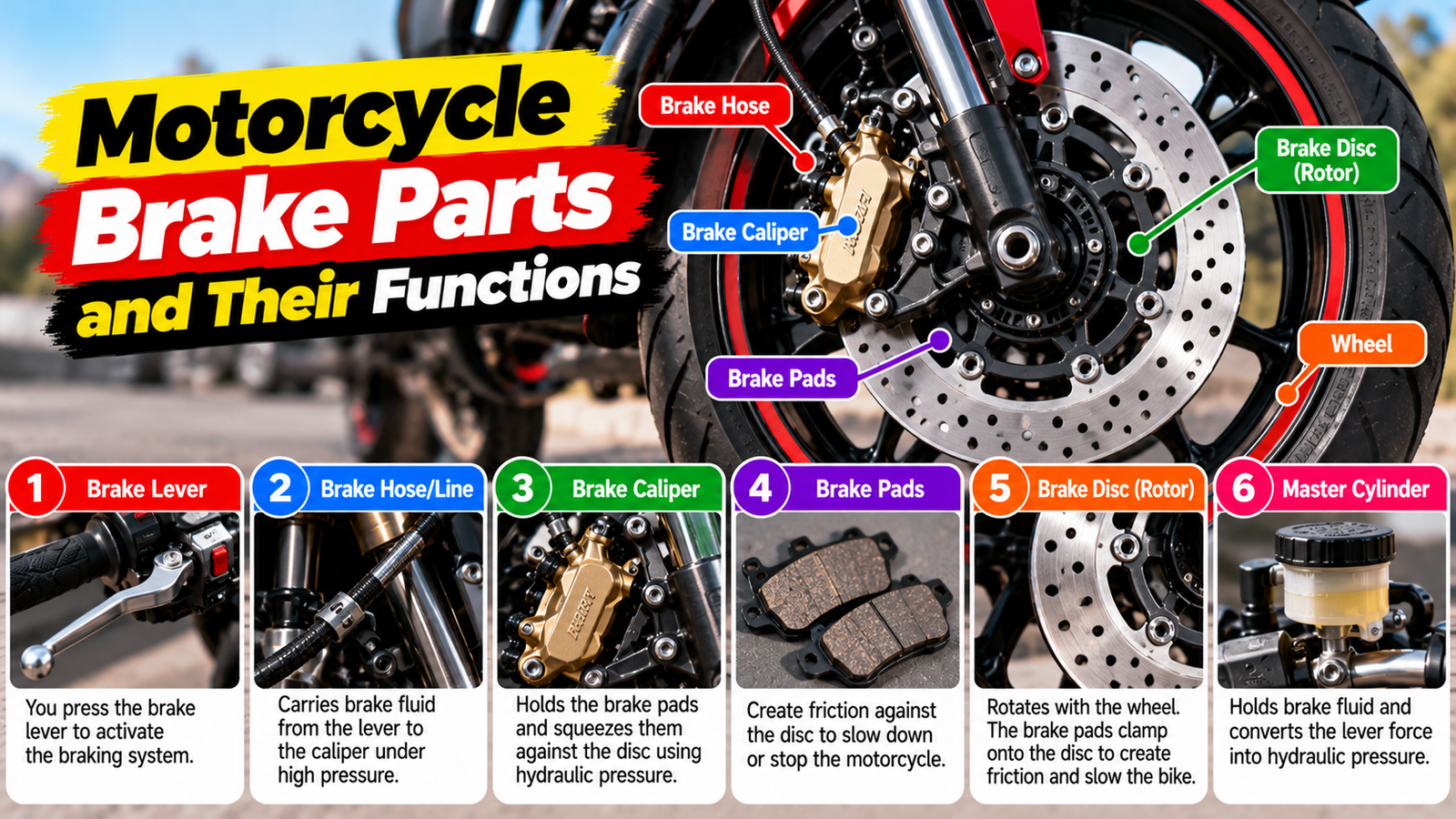
The brake lever is the control that the rider presses to activate the brake. The front brake lever is usually located on the right side of the handlebar.
When the rider pulls the lever, it activates the braking mechanism. On a hydraulic disc brake system, the lever pushes a piston inside the master cylinder. This creates hydraulic pressure that moves the brake caliper pistons and presses the brake pads against the disc.
On some cable operated systems, pulling the lever moves a cable that activates the brake mechanism.
A brake lever should move smoothly and should not feel excessively loose, stiff, or spongy. If the lever suddenly changes its feel, the braking system should be inspected before the motorcycle is used again.
2. Brake Pedal
The rear brake pedal is generally positioned near the rider’s right foot. Pressing it activates the rear braking system.
On a motorcycle with a rear disc brake, the pedal operates a master cylinder that sends hydraulic pressure to the rear caliper. On a drum brake system, the pedal may pull a mechanical linkage that moves the brake shoes against the drum.
The brake pedal should have suitable free play according to the manufacturer’s instructions. Excessive movement may indicate an adjustment problem, while insufficient free play can cause the brake to drag.
3. Brake Pads
Brake pads are important components of a disc braking system. They contain friction material that presses against the rotating brake disc when the rider applies the brake.
This friction converts the motorcycle’s movement into heat and reduces wheel speed. Brake pads gradually wear down because their friction material makes repeated contact with the disc.
Different motorcycles use different pad shapes and materials. Common options include organic, semi metallic, and sintered pads. Each type has different characteristics related to braking performance, noise, durability, and heat resistance.
Worn brake pads may produce squealing sounds, reduced braking performance, or a visible reduction in friction material. Riders should inspect the pads regularly and replace them before they reach the manufacturer’s minimum thickness.
4. Brake Disc or Rotor
The brake disc, also called the rotor, is a metal component attached to the wheel. It rotates with the wheel while the brake caliper remains mounted in position.
When the rider applies the brake, the pads squeeze both sides of the disc. The resulting friction slows the wheel.
Many motorcycle brake discs have holes or shaped surfaces that help manage heat and remove water and debris. The design varies according to the motorcycle’s braking requirements.
A damaged disc may develop deep grooves, excessive wear, cracks, or distortion. These problems can cause vibration, unusual sounds, or inconsistent braking.
Brake discs should be checked for their minimum permitted thickness and other damage. A disc that is below the manufacturer’s limit must be replaced.
5. Brake Caliper
The brake caliper holds the brake pads and applies pressure to them. It is a major component of a hydraulic disc brake system.
When hydraulic pressure reaches the caliper, pistons move outward and press the pads against the brake disc. When the brake is released, the pads move away from the disc slightly, allowing the wheel to rotate freely.
Calipers may contain one or several pistons. Some are fixed in position, while others slide to apply pressure evenly across the pads.
A sticking caliper can cause uneven pad wear, overheating, dragging brakes, or reduced braking performance. Regular inspection helps identify leaks, corrosion, and movement problems.
6. Master Cylinder
The master cylinder converts the rider’s input into hydraulic pressure. It is commonly connected to the front brake lever or rear brake pedal.
When the rider applies the control, a piston inside the master cylinder pressurizes the brake fluid. The fluid carries this pressure through the brake hose to the caliper.
The master cylinder also contains seals and other internal components that help maintain pressure. Damaged seals can lead to fluid leaks or a brake lever that slowly sinks under constant pressure.
The master cylinder reservoir should be checked according to the manufacturer’s maintenance schedule. Only the specified type of brake fluid should be used.
7. Brake Fluid
Brake fluid transfers pressure through a hydraulic braking system. It allows force from the brake lever or pedal to reach the caliper.
Brake fluid must be compatible with the motorcycle’s braking system. Many motorcycles use a specified DOT rated fluid, but the correct type must always be confirmed in the owner’s manual or on the reservoir cap.
Brake fluid can absorb moisture over time, which may reduce its performance under high temperatures. Old or contaminated fluid can also contribute to corrosion inside the system.
The fluid should be replaced at the interval recommended by the manufacturer. Never mix incompatible fluid types or allow oil, grease, or dirt to enter the reservoir.
8. Brake Hose and Brake Lines
Brake hoses and lines carry hydraulic fluid from the master cylinder to the caliper. They must withstand pressure without leaking or expanding excessively.
Some motorcycles use rubber brake hoses, while others use reinforced or braided lines. The correct replacement must be designed for the specific motorcycle and its braking system.
Cracked hoses, damaged fittings, leaks, or unusual swelling are signs that inspection is needed. A leaking brake line can seriously reduce braking ability, so the motorcycle should not be ridden until the problem is repaired.
9. Brake Shoes
Brake shoes are used in drum braking systems. They contain friction material on their outer surfaces and sit inside the brake drum.
When the rider applies the brake, a cam or other mechanism pushes the shoes outward. The friction material contacts the inside surface of the rotating drum and slows the wheel.
Brake shoes gradually wear down and eventually require replacement. Worn shoes may cause reduced braking, unusual noises, or excessive brake pedal movement.
The shoes and related parts should be inspected whenever the drum brake is serviced.
10. Brake Drum
A brake drum is a round metal component that rotates with the wheel. The brake shoes sit inside it.
When the brake is applied, the shoes press outward against the inner surface of the drum. Friction between the shoes and drum reduces the wheel’s speed.
Drum brakes are often used on the rear wheels of commuter motorcycles because they can be practical and relatively simple to maintain.
A drum may become worn, scored, or damaged over time. It should be inspected for wear and replaced if it exceeds the manufacturer’s limits.
11. Return Springs and Brake Linkage
Drum brakes use springs to return the brake shoes to their resting position after the rider releases the brake. Mechanical systems may also include rods, cables, adjusters, and connecting joints.
These parts help ensure that the brake releases properly. Weak springs, damaged linkages, or incorrect adjustment can cause dragging brakes or inconsistent operation.
During maintenance, the linkage should be checked for wear, corrosion, free movement, and correct adjustment.
12. ABS Sensors and Control Unit
Some modern motorcycles include an Anti Lock Braking System, commonly called ABS. This system helps prevent the wheels from locking during hard braking.
Wheel speed sensors monitor how quickly each wheel rotates. The ABS control unit processes this information and can adjust hydraulic pressure when it detects a risk of wheel lock.
ABS does not remove the need for careful braking or safe riding. Riders should still maintain a suitable following distance and adjust their speed to road conditions.
ABS sensors, wiring, and warning lights should be checked if the system displays a fault.
How to Maintain Motorcycle Brake Parts
Regular maintenance helps keep motorcycle brakes reliable. Riders should inspect brake pads or shoes, check brake fluid levels, look for leaks, and pay attention to unusual sounds or changes in brake feel.
The brake disc and drum should be checked for excessive wear or damage. Brake controls should move smoothly, and the braking system should be serviced according to the motorcycle manufacturer’s instructions.
Brake parts should always be replaced with compatible components of the correct specification. If braking performance changes suddenly, professional inspection is the safest option.
Conclusion
Motorcycle brake parts work together to provide controlled and reliable stopping. Brake levers and pedals allow the rider to activate the system, while pads or shoes create friction against a disc or drum. The master cylinder, brake fluid, hoses, and calipers help transmit force in hydraulic systems, while ABS components provide additional control on equipped motorcycles.
Understanding motorcycle brake parts and their functions makes routine maintenance easier and helps riders recognize warning signs early. Regular inspections, correct replacement parts, and safe riding habits are essential for keeping a motorcycle’s braking system in good condition.