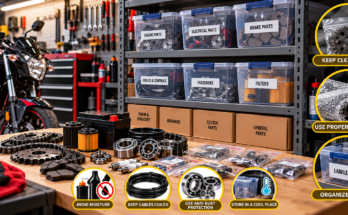
Choosing motorcycle spare parts can be confusing because several products may appear suitable for the same motorcycle. Some parts are sold by the original motorcycle manufacturer, while others come from independent manufacturers. Prices, materials, warranties, and product specifications may vary considerably.
Comparing motorcycle spare parts before purchasing helps you find a component that fits correctly, offers suitable quality, and meets your budget. It also reduces the risk of buying an unsuitable product simply because it is cheaper or has attractive packaging.
In this guide, I will explain how to compare motorcycle spare parts step by step, including compatibility, quality, price, manufacturer reputation, warranty, and seller reliability.
Identify the Exact Part You Need
Before comparing products, make sure you know which component your motorcycle requires. Start with the motorcycle’s make, model, engine capacity, and manufacturing year.
Check the owner’s manual, official parts catalogue, or advice from a qualified mechanic. If the old component is available, its part number may help identify the correct replacement.
This step is important because comparing two parts is only useful when both are suitable for the same application. A cheaper part that does not fit your motorcycle is not a good alternative.
For components with different versions, such as spark plugs, batteries, chains, and brake parts, verify the technical specifications before moving to the next step.
Compare Genuine, OEM, and Aftermarket Options
One of the first comparisons involves the type of replacement part.
Genuine parts are supplied under the motorcycle manufacturer’s brand or through its authorized parts network. They can be convenient when you need an exact replacement that follows the original specification.
OEM stands for original equipment manufacturer. Sellers use the term in different ways, so confirm who actually manufactured the product and whether it meets the specification you need.
Aftermarket parts are made by independent manufacturers. Some offer reliable alternatives, while others may differ in quality, design, and fitment.
Do not assume that every aftermarket part is inferior or that every product described as OEM is genuine. Compare the manufacturer’s information, part number, specifications, and seller credibility.
Compare Product Specifications
Specifications are often more important than appearance. A part may look almost identical to another but have different dimensions, electrical ratings, materials, or operating limits.
When comparing products, check the specifications that matter for the component.
For example, a motorcycle battery should have the correct voltage, suitable capacity, compatible terminal arrangement, and appropriate physical dimensions. A chain needs the correct size, type, and length. A spark plug must match the specified thread dimensions and heat range.
For a clutch cable, compare length, end fittings, routing requirements, and adjustment range. For brake components, confirm the exact motorcycle application and required dimensions.
Use the manufacturer’s service information rather than relying only on a seller’s broad compatibility claims.
Evaluate the Quality of Materials
Materials influence how a spare part performs under normal operating conditions. Different motorcycle components experience different loads, temperatures, friction, and exposure to moisture.
Inspect physical products for cracks, corrosion, damaged threads, poor finishing, or loose connections. For rubber parts, check for cuts or deterioration. For electrical components, inspect connectors and insulation.
However, a visual inspection cannot establish every aspect of quality. Internal tolerances, material composition, heat treatment, and electrical performance may require technical testing or reliable manufacturer documentation.
When those details matter, select a product from a manufacturer that provides credible specifications and quality information.
Compare Prices Fairly
Price comparison can help you find value, but make sure you compare equivalent products.
Check whether the products have the same part number, specification, quantity, warranty, and included accessories. A package containing additional seals or installation hardware may cost more than a basic component but offer a different overall value.
Also consider shipping fees, taxes, delivery time, and the cost of returning an incompatible part when shopping online.
Be cautious of a price that is dramatically lower than other offers for the exact same branded component. It may be a legitimate promotion, but it is worth verifying the product’s origin and condition.
The most expensive option is not automatically the best. The aim is to find a reliable, compatible part at a reasonable total cost.
Research the Manufacturer’s Reputation
Before choosing a product, learn about the manufacturer. Check its official website, product catalogue, technical documentation, and available customer support.
Customer reviews can be useful, especially when they discuss the exact part and motorcycle model. Look for repeated comments about fitment, durability, or premature failure rather than relying on a single review.
Be careful with vague reviews that provide no information about the product’s use. A part that works well on one motorcycle may not be suitable for another.
For critical components, prioritize a manufacturer with traceable products and clear technical specifications.
Check the Seller’s Reliability
The same spare part may be available from several sellers, but the purchasing experience can differ.
Look for a seller that provides accurate product descriptions, clear contact information, reasonable delivery terms, and a written return policy.
If you are purchasing in person, ask the seller to confirm compatibility before payment. If you are shopping online, compare the product listing with the manufacturer’s information.
For branded components, consider authorized dealers or suppliers with a reliable source for their stock. Keep the invoice and packaging until you have verified that the part is correct.

Compare Warranty and Return Conditions
A warranty may provide protection against certain manufacturing defects, but its coverage varies between products and sellers.
Check how long the warranty lasts, which problems are covered, and what documentation is required. Some warranties exclude normal wear, incorrect installation, modifications, or damage caused by improper use.
Return conditions are equally important. Ask whether an unused part can be exchanged if it does not fit and whether the original packaging must be intact.
Do not choose a product based only on the statement that it has a warranty. Read the actual terms and consider how practical it would be to use the warranty if needed.
Consider the Importance of the Part
Not all motorcycle components deserve the same purchasing approach. A cosmetic cover and a brake component have different consequences if they fail.
For safety critical parts such as brake pads, tyres, steering components, and suspension parts, focus on verified specifications, manufacturer reliability, and correct fitment.
For routine consumables, compare service life, ease of replacement, availability, and total cost. A reasonably priced filter from a reliable manufacturer may be a sensible choice if it meets the motorcycle’s requirements.
Do not compromise on safety by purchasing a part with unknown specifications simply because it is inexpensive.
Compare Expected Service Life
A part’s purchase price is only one part of its overall cost. A component that lasts longer under suitable operating conditions may provide better value, although actual service life depends on use and maintenance.
Consider the manufacturer’s stated service information, warranty, materials, and feedback from users with similar motorcycles.
Avoid promises that a part will last a specific number of years unless that claim is supported by reliable information and relevant operating conditions.
For components that wear through normal use, follow the motorcycle’s inspection and replacement schedule rather than waiting for a part to fail.
Use a Simple Comparison Checklist
Before purchasing, ask yourself these questions:
- Does the part match my exact motorcycle model?
- Have I verified the part number and specifications?
- Is the manufacturer or product source reliable?
- Are the materials and construction suitable?
- Is the price reasonable compared with equivalent products?
- Are the warranty and return conditions clear?
- Is the part appropriate for the safety requirements of its application?
If important details remain uncertain, ask a qualified mechanic or the supplier for clarification before paying.
Conclusion
Comparing motorcycle spare parts involves more than checking prices. Confirm compatibility, compare specifications, evaluate the manufacturer, inspect product quality, and review warranty and return conditions.
Choose parts according to their intended application and the importance of the component. For safety critical items, prioritize verified quality and correct fitment over a low price.
A careful comparison helps you make an informed purchase, avoid unnecessary expenses, and maintain your motorcycle with suitable replacement parts.