The motorcycle chain and sprocket are important parts of the drivetrain. They transfer power from the engine to the rear wheel, allowing the motorcycle to move. When these components are in good condition, the bike can accelerate smoothly and deliver power efficiently. However, when the chain or sprockets become worn, the motorcycle may develop noise, vibration, jerky movement, or other performance problems.
In my opinion, many riders focus on engine oil, tyres, and brakes but forget to maintain the motorcycle chain and sprocket regularly. This can lead to unnecessary repair expenses and potentially dangerous riding conditions.
Understanding when to replace a motorcycle chain and sprocket is important for every rider. In this article, I will explain the warning signs, common causes of wear, maintenance tips, and factors to consider when buying replacement parts.
What Is a Motorcycle Chain and Sprocket?
A motorcycle chain and sprocket system transfers rotational power from the gearbox output shaft to the rear wheel.
The system usually includes a front sprocket, a rear sprocket, and a drive chain. The front sprocket connects to the gearbox output shaft, while the rear sprocket is attached to the rear wheel.
When the engine produces power, the gearbox rotates the front sprocket. The chain transfers this movement to the rear sprocket, which turns the rear wheel.
All three components work together. If the chain stretches through wear or the sprocket teeth become damaged, the entire system may operate less smoothly.
1. Signs of a Worn Motorcycle Chain
The motorcycle chain gradually wears as its internal pins and bushings experience friction and repeated movement. This wear changes the chain’s effective length, often described as chain stretch.
Several warning signs can indicate that a chain needs attention.
Excessive Chain Slack
Every motorcycle has a recommended chain slack measurement. If the chain becomes too loose, it may slap against surrounding components, produce noise, or move excessively.
A chain that is too tight is also a problem because it places additional stress on the drivetrain, wheel bearings, and output shaft.
Check the chain slack according to the motorcycle manufacturer’s instructions, with the motorcycle positioned as specified in the owner’s manual.
Stiff or Rusty Links
A healthy chain should move freely around the sprockets. If some links remain stiff, fail to bend smoothly, or show significant corrosion, the chain may be damaged or poorly maintained.
Rust can develop when the chain is exposed to moisture without adequate cleaning and lubrication.
If stiff links remain after proper cleaning and lubrication, replacement may be necessary.
Unusual Chain Noise
A worn or poorly lubricated motorcycle chain may produce clicking, rattling, or grinding sounds.
However, noise can also result from incorrect adjustment, damaged sprocket teeth, or other drivetrain problems.
If the noise continues after checking the chain slack and lubrication, inspect the entire chain and sprocket system.
Visible Wear or Damage
Look for damaged side plates, cracked links, missing rollers, or other visible defects. A chain with serious structural damage should not be used.
If the chain has reached the manufacturer’s wear limit, replace it rather than attempting to extend its life through repeated adjustment.
2. Signs of Worn Motorcycle Sprockets
Sprockets contain teeth that engage with the chain. Over time, friction and drivetrain loads can wear these teeth.
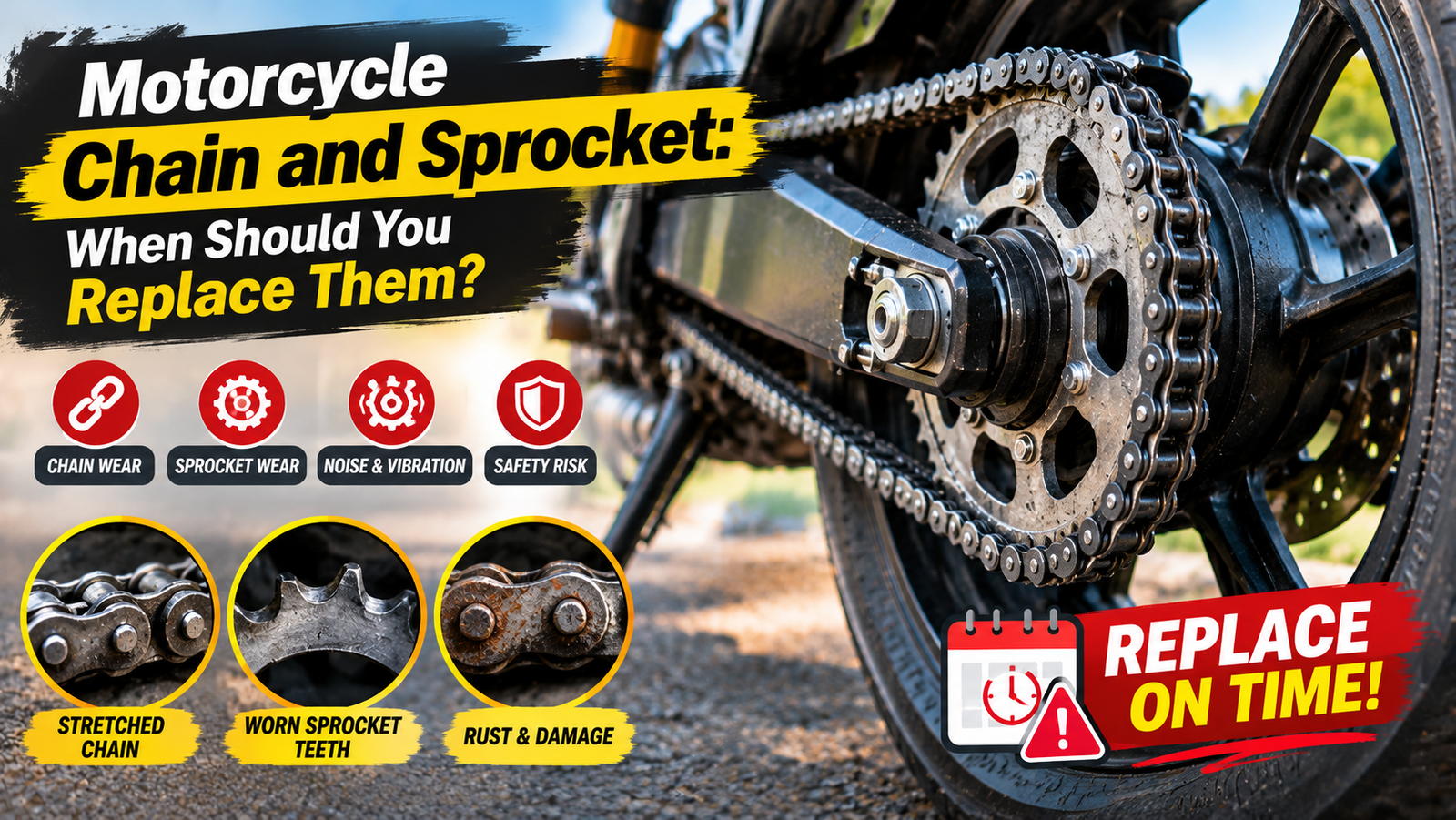
One common warning sign is hooked or pointed sprocket teeth. Healthy sprocket teeth generally have a more uniform shape, while heavily worn teeth may appear curved, sharpened, or uneven.
Other signs include missing teeth, damaged surfaces, and irregular wear across the sprocket.
A worn sprocket may cause the chain to engage poorly, increase noise, and accelerate wear on the replacement chain.
In my view, inspecting the sprockets whenever the chain is cleaned or adjusted is a sensible maintenance habit. Replacing only the chain while leaving severely worn sprockets in place can shorten the life of the new chain.
3. When Should You Replace the Motorcycle Chain and Sprocket?
There is no single replacement mileage that applies to every motorcycle. The service life depends on chain quality, engine power, riding style, maintenance, weather, road conditions, and the manufacturer’s specifications.
Some motorcycles may require replacement much earlier than others, while well maintained systems may last considerably longer.
You should consider replacing the chain and sprockets when:
- The chain has reached its specified wear or elongation limit.
- The chain contains damaged links or persistent stiff sections.
- The sprocket teeth are badly hooked, broken, or uneven.
- The chain repeatedly requires adjustment over short periods.
- The chain skips over the sprocket teeth or fails to engage correctly.
- Rust or damage has significantly affected the chain’s condition.
If the chain jumps over sprocket teeth or has serious structural damage, stop riding and arrange proper repairs. Continuing to use a severely worn drivetrain can cause sudden failure.
4. Why Replacing the Chain and Sprockets Together Is Important
The chain and sprockets wear against each other. As their shapes change, they may no longer engage correctly with new components.
Installing a new chain on badly worn sprockets can cause poor engagement and accelerate wear on the new chain.
Similarly, installing new sprockets while retaining a severely worn chain may reduce the lifespan of the replacement parts.
For this reason, mechanics commonly recommend replacing the chain and both sprockets together when the drivetrain is significantly worn. Follow the motorcycle manufacturer’s service guidance and have the components inspected as a set.
5. Common Causes of Motorcycle Chain and Sprocket Wear
Several factors influence drivetrain lifespan.
Poor lubrication: A dry chain experiences greater friction, which can accelerate wear.
Incorrect chain tension: Excessive tightness or slack can place additional stress on the chain and sprockets.
Dirt and dust: Abrasive particles can increase wear when they accumulate around the moving components.
Water and corrosion: Moisture can encourage rust, particularly when the chain is not cleaned and maintained.
Aggressive acceleration: Sudden changes in engine load can increase stress on the drivetrain.
Poor quality replacement parts: Components that do not meet the motorcycle’s requirements may wear prematurely or fail.
Maintaining the chain correctly can reduce unnecessary wear, but regular inspection remains essential.
6. How to Maintain a Motorcycle Chain and Sprocket
Proper maintenance helps keep the drivetrain operating smoothly.
First, check the chain slack at the intervals recommended by the manufacturer. The correct measurement is important because the chain becomes tighter and looser as the rear suspension moves.
Second, clean the chain using a cleaner approved for its chain type. Avoid harsh chemicals that can damage seals or other components.
Third, apply a suitable motorcycle chain lubricant according to the manufacturer’s instructions. Different chain designs may have specific lubrication requirements.
Fourth, inspect the chain for rust, stiff links, and visible damage. Check the sprocket teeth at the same time.
Finally, ensure the rear wheel is aligned correctly after chain adjustment. Incorrect alignment can contribute to uneven wear and handling problems.
Always switch off the engine during chain maintenance. Never use the engine to rotate the rear wheel while cleaning or lubricating the chain because moving drivetrain components can cause serious injuries.
7. Choosing the Right Replacement Chain and Sprockets
When purchasing replacement motorcycle chain and sprocket parts, compatibility should be the main priority.
Check the chain size, length, sprocket tooth count, and specifications recommended for your motorcycle. The chain must also have an appropriate strength rating for the bike’s engine output and intended use.
Original equipment manufacturer parts can provide a straightforward replacement option. Reputable aftermarket components may also be suitable when they meet the required specifications.
Avoid choosing a chain only because it is inexpensive. Poorly matched or low quality parts can create additional maintenance costs and safety concerns.
If you are uncertain about the correct specifications, consult the owner’s manual or a qualified motorcycle mechanic.
Frequently Asked Questions
How long does a motorcycle chain and sprocket last?
Their lifespan varies with maintenance, riding style, road conditions, and component quality. Follow the manufacturer’s inspection schedule and replace the parts when they reach their service limits.
Should I replace the motorcycle chain and sprockets together?
It is generally advisable when the chain and sprockets are significantly worn. Replacing them as a set helps ensure proper engagement and can prevent premature wear of new components.
Can I ride a motorcycle with a loose chain?
A chain that is excessively loose can create noise, damage surrounding components, or come off the sprockets. Correct the chain slack before riding.
What happens if a motorcycle chain breaks?
A broken chain can stop power from reaching the rear wheel and may damage nearby components. Depending on how it fails, it can create a serious riding hazard. Stop using the motorcycle if the chain shows signs of severe damage.
Conclusion
The motorcycle chain and sprocket are essential drivetrain components that need regular inspection and maintenance. Warning signs such as excessive slack, stiff links, unusual noise, and hooked sprocket teeth should never be ignored.
In my opinion, replacing worn chain and sprocket parts at the correct time is better than waiting for complete failure. Regular cleaning, proper lubrication, correct adjustment, and suitable replacement components can help extend their service life.
If your motorcycle develops repeated chain problems or the drivetrain shows significant damage, have it inspected by a qualified mechanic. A properly maintained chain and sprocket system supports smoother power delivery and safer riding.