Motorcycle shock absorbers play an important role in riding comfort, stability, and control. Whenever a motorcycle travels over a pothole, speed breaker, uneven road, or rough surface, the suspension system helps manage the movement caused by these impacts. Without a properly working suspension system, riding would feel uncomfortable, and maintaining consistent tyre contact with the road would become more difficult.
In my opinion, understanding how motorcycle shock absorbers work helps riders recognise suspension problems before they become serious. Many riders notice bouncing or unusual handling but do not know which components are responsible.
In this article, I will explain the function of motorcycle shock absorbers, their main parts, different types, common problems, and maintenance tips.
What Are Motorcycle Shock Absorbers?
Motorcycle shock absorbers are suspension components designed to control the movement of the suspension after the motorcycle encounters a bump or another road irregularity.
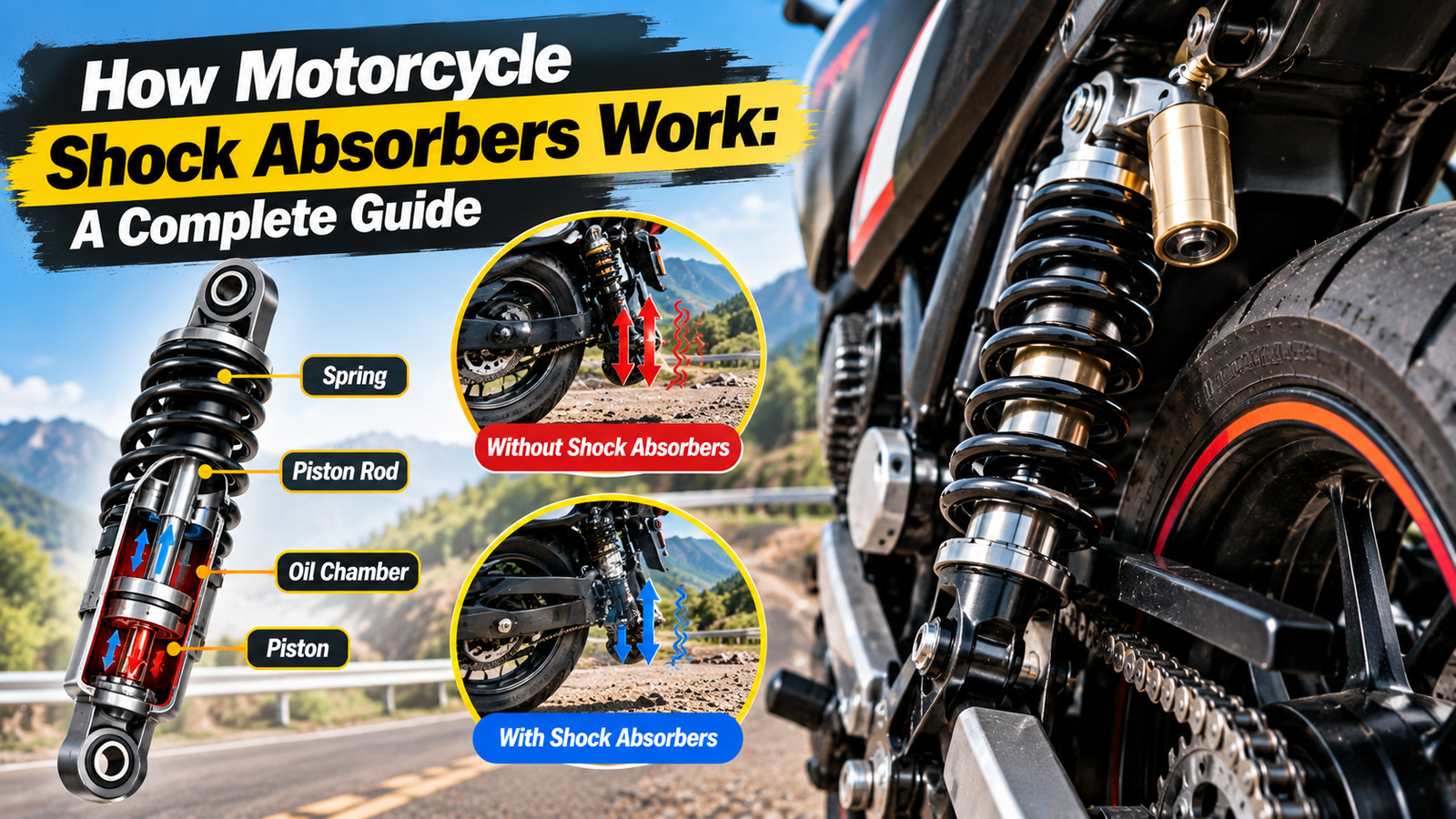
They work with springs and other suspension components to absorb and control movement. The spring compresses when a wheel encounters an impact, while the shock absorber controls how quickly the spring compresses and returns.
Without sufficient damping, a spring could continue bouncing repeatedly after hitting a bump. The shock absorber helps reduce this unwanted movement, allowing the motorcycle to settle more quickly.
Motorcycles use different suspension designs depending on their size, intended purpose, and construction. Common examples include telescopic front forks and rear shock absorbers.
How Do Motorcycle Shock Absorbers Work?
To understand how motorcycle shock absorbers work, imagine riding over a speed breaker.
When the front wheel reaches the raised surface, the suspension compresses. The spring stores some of the energy created by the impact. As the wheel moves back toward its normal position, the spring releases that energy.
The shock absorber controls this movement through damping. In many designs, hydraulic oil moves through small passages and valves inside the unit. The resistance created by the oil flow helps control the suspension’s movement.
This process reduces excessive bouncing and helps the tyre remain in contact with the road.
The rear suspension works in a similar way. When the rear wheel encounters a pothole or bump, the spring compresses, and the shock absorber controls the movement.
The result is a more controlled ride, better stability, and improved comfort.
Main Parts of a Motorcycle Shock Absorber
Motorcycle shock absorbers contain several components that work together.
1. Spring
The spring supports the motorcycle’s weight and compresses when the wheel encounters an impact. It also helps the suspension return toward its normal position.
The spring rate influences how much force is required to compress the spring by a certain distance.
2. Damper
The damper controls the speed of suspension movement. It prevents the spring from bouncing excessively after compression.
Many motorcycle dampers use hydraulic oil and internal valves to create resistance.
3. Piston and Valves
In many hydraulic shock absorbers, a piston moves through oil inside a cylinder. Valves regulate the oil flow and control damping during compression and rebound.
The design of these components influences suspension performance under different riding conditions.
4. Shock Body
The shock body houses important internal components. Depending on the design, it contains the piston, oil, and other parts required for damping.
Damage, leakage, or corrosion may affect its performance.
5. Mounting Points
Mounting points connect the shock absorber to the motorcycle frame and suspension linkage. Worn or loose mounting hardware can cause noise and affect suspension operation.
The exact construction varies according to the motorcycle model and suspension design.
Types of Motorcycle Shock Absorbers
Different motorcycles use different suspension arrangements.
Telescopic Front Forks
Telescopic forks are widely used on motorcycles. They contain sliding tubes, springs, and damping mechanisms that allow the front wheel to move upward and downward.
When the front wheel encounters a bump, the forks compress and help absorb the impact. They also influence braking stability and steering behaviour.
Some forks have conventional designs, while others use inverted construction or more advanced damping systems.
Twin Rear Shock Absorbers
Some motorcycles use two rear shock absorbers, one on each side of the rear wheel.
This arrangement is common on many traditional commuter motorcycles and certain classic or utility models.
Twin shock absorbers distribute suspension support across both sides of the rear wheel assembly. Their performance depends on the design, spring settings, and condition of the components.
Monoshock Suspension
A monoshock system uses one main rear shock absorber. It is commonly connected to the rear wheel through a suspension linkage.
This arrangement can provide controlled suspension movement and is used on many modern motorcycles.
However, the quality of the suspension depends on its design and adjustment rather than simply the number of shock absorbers.
Gas Charged Shock Absorbers
Some motorcycle shock absorbers use pressurised gas alongside hydraulic oil. The gas helps manage pressure changes and can reduce unwanted aeration of the oil under demanding conditions.
These systems are used in various performance and everyday motorcycle applications. Their construction and service requirements differ between models.
Why Are Motorcycle Shock Absorbers Important?
Shock absorbers are important for several reasons.
Riding comfort: They help control the movement caused by uneven roads, making everyday journeys more comfortable.
Tyre contact: Proper suspension movement helps the tyres maintain contact with the road surface.
Handling stability: Controlled suspension movement can make steering and cornering more predictable.
Braking control: The front suspension plays an important role when the motorcycle slows down and weight shifts forward.
Component protection: Suspension components help manage road impacts and reduce the transmission of some forces to other motorcycle parts.
Shock absorbers do not eliminate every impact, but they help the motorcycle respond to road irregularities in a controlled manner.
Signs of Motorcycle Shock Absorber Problems
Shock absorbers can lose performance because of wear, damaged seals, oil leakage, corrosion, or internal component failure.
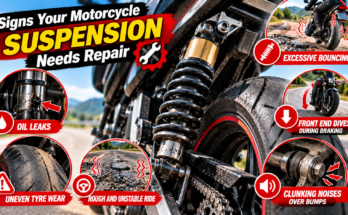
One common sign is excessive bouncing after crossing a bump. If the motorcycle continues oscillating instead of settling quickly, the suspension may not be damping movement correctly.
Oil around the shock absorber or fork seals can also indicate a problem. A small amount of dirt or surface moisture should not automatically be mistaken for a leak, so inspection may be necessary.
Other warning signs include unusual knocking sounds, a harsh ride, poor stability, uneven tyre wear, and excessive front end diving during braking.
These symptoms can have multiple causes. Tyre pressure, wheel bearings, suspension bushings, steering bearings, and other components should also be checked before identifying the shock absorber as the source.
How to Maintain Motorcycle Shock Absorbers
Regular inspection can help identify suspension problems early.
First, inspect the shock absorbers and front forks for oil leakage, damaged seals, rust, or bent components.
Second, pay attention to changes in riding comfort and handling. New noises, repeated bouncing, or unexpected instability should not be ignored.
Third, keep the exposed fork surfaces clean and follow the manufacturer’s maintenance recommendations.
Fourth, check the motorcycle’s load limits. Carrying excessive weight can place additional stress on the suspension.
Finally, have worn or damaged components inspected by a qualified mechanic. Some shock absorbers are serviceable, while others are designed to be replaced as complete units.
Avoid opening pressurised suspension components without the correct equipment and training.
Can Motorcycle Shock Absorbers Be Adjusted?
Some motorcycle shock absorbers have adjustable preload, rebound damping, or compression damping. Other models provide limited adjustment or none at all.
Preload changes the initial compression of the spring and helps the suspension accommodate different loads. It does not directly change the spring’s actual rate.
Rebound adjustment controls how quickly the suspension returns after compression, while compression adjustment influences resistance during compression on systems equipped with that feature.
Incorrect adjustment can make the motorcycle feel unstable, harsh, or poorly controlled. Riders should follow the manufacturer’s instructions and make changes carefully.
Frequently Asked Questions
How long do motorcycle shock absorbers last?
There is no universal replacement mileage. Lifespan depends on the motorcycle, road conditions, load, riding style, maintenance, and shock absorber design. Regular inspections help identify wear before performance becomes seriously affected.
Can bad shock absorbers affect motorcycle tyres?
Yes. Poor damping can affect how the tyres follow uneven road surfaces and may contribute to irregular tyre wear. However, incorrect pressure, alignment, and other mechanical faults can also cause tyre problems.
Are adjustable motorcycle shock absorbers better?
Adjustable shock absorbers provide more opportunities to tailor suspension behaviour to the rider and load. However, a well designed non adjustable unit can also perform effectively when it is suitable for the motorcycle.
Should motorcycle shock absorbers be repaired or replaced?
The correct option depends on the shock absorber design, the type of damage, part availability, and the manufacturer’s recommendations. Some units can be serviced, while others are better replaced.
Conclusion
Motorcycle shock absorbers help control suspension movement, improve comfort, and support stable handling. They work alongside springs and other suspension components to manage the forces created by uneven roads.
In my opinion, every rider should understand the basic function of motorcycle suspension because changes in bouncing, handling, or noise can indicate a maintenance problem.
Regular inspections, correct loading, and timely repairs can help keep the suspension working properly. If the shock absorbers leak oil, produce unusual noises, or no longer control bouncing effectively, arrange a professional inspection before continuing to rely on the motorcycle for regular travel.