A motorcycle starter motor is an important electrical component that helps start the engine. When a rider presses the electric start button, the starter motor uses electrical energy from the battery to rotate the engine until combustion can begin and the engine runs independently.
Without a properly working starter system, starting a motorcycle can become difficult or impossible, especially on models that do not have a kick starter.
In my opinion, understanding how a motorcycle starter motor works helps riders identify common starting problems and avoid replacing parts unnecessarily. A motorcycle that fails to start may have a weak battery, a faulty starter motor, a damaged relay, or an electrical connection problem.
In this article, I will explain the working principle of a motorcycle starter motor, its main components, common warning signs, and maintenance tips.
What Is a Motorcycle Starter Motor?
A motorcycle starter motor is a small electric motor designed to rotate the engine during startup.
When the engine is switched off, it cannot normally begin operating by itself. The starter motor provides the initial rotation needed for the engine’s internal processes to begin.
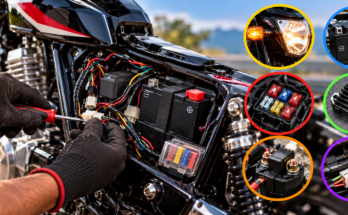
Depending on the motorcycle design, the starter system may include a starter motor, battery, starter relay, start button, wiring, and a mechanical engagement mechanism.
Once the engine starts and runs independently, the starter motor is no longer needed to keep it running.
How Does a Motorcycle Starter Motor Work?
The starting process begins when the rider switches on the motorcycle and presses the electric start button.
The control circuit activates the starter relay when the required safety conditions are satisfied. The relay allows high electrical current to flow from the battery to the starter motor.
Inside the starter motor, electrical current interacts with a magnetic field to produce rotational force. This turns the starter motor shaft.
A mechanical engagement system then transfers this movement to the engine. Depending on the motorcycle design, the system may use gears and a starter clutch or another suitable arrangement.
The starter motor rotates the engine, allowing the ignition and fuel systems to begin their normal operations. When combustion becomes self sustaining, the engine starts running independently.
The starter system then disengages according to the motorcycle’s design, preventing the starter motor from continuing to drive the running engine.
Main Parts of a Motorcycle Starter System
1. Starter Motor
The starter motor converts electrical energy into mechanical rotation. It is designed to deliver strong starting torque for a short period.
If its internal windings, brushes, bearings, or other components become damaged, the motor may turn slowly or fail to operate.
2. Battery
The battery supplies the electrical energy required by the starter motor.
Starting an engine requires considerable current, so a weak battery may power small electrical components but still fail to operate the starter properly.
3. Starter Relay
The starter relay acts as an electrically controlled switch. It allows a relatively small control current to operate the circuit that supplies high current to the starter motor.
A faulty relay may click without delivering sufficient current or may fail to activate at all.
4. Start Button
The start button sends a control signal to the starter circuit.
Dirt, wear, moisture, or internal electrical damage can prevent the button from operating correctly.
5. Starter Gears and Engagement Mechanism
These components transfer the starter motor’s rotation to the engine.
Some motorcycles use a starter clutch or one way clutch that allows the starting mechanism to engage during cranking and disengage once the engine is running.
The exact arrangement depends on the motorcycle model.
6. Wiring and Ground Connections
Electrical cables carry current between the battery, relay, starter motor, and ground points.
Loose or corroded connections can restrict current flow and create symptoms similar to a failed starter motor.
Common Signs of Motorcycle Starter Motor Problems
Starter motor problems can appear in several ways.
1. The Starter Motor Does Not Turn
If you press the start button and nothing happens, the cause may be a discharged battery, faulty relay, damaged start button, broken wire, or starter motor failure.
Some motorcycles also include safety switches that prevent starting under certain conditions.
Check the owner’s manual and basic controls before assuming the starter motor is defective.
2. A Clicking Sound Without Engine Cranking
A clicking sound may indicate that the starter relay is activating but the starter motor is not receiving enough current.
A weak battery or poor connection is a common possibility. A damaged relay or starter motor may also cause this symptom.
Inspect the battery connections and have the battery tested if necessary.

3. Slow Engine Cranking
If the starter motor turns the engine unusually slowly, the battery may be weak or the electrical circuit may have excessive resistance.
The starter motor itself may also have worn internal components.
Cold conditions and engine related problems can influence cranking performance, so the full starting system should be checked.
4. Grinding or Unusual Mechanical Noise
A grinding sound during startup may indicate a problem with starter gears, the engagement mechanism, or related components.
Do not repeatedly press the start button when grinding occurs. Continuing to operate a damaged mechanism may cause further damage.
Arrange an inspection to identify the source of the noise.
5. Starter Motor Keeps Running
If the starter motor continues operating after the engine starts or after the start button is released, stop using the motorcycle and address the problem immediately.
A stuck relay, faulty control circuit, or engagement problem may be responsible.
A starter motor that remains engaged can overheat and damage the starting system.
Common Causes of Starter Motor Failure
Several factors can affect starter motor performance.
Weak battery: The battery may not provide enough current to turn the engine.
Worn internal components: Brushes, bearings, or other starter motor components may deteriorate over time.
Faulty starter relay: The relay may fail to connect the battery to the starter motor correctly.
Corroded connections: Corrosion can restrict current flow.
Damaged wiring: Broken or damaged cables may interrupt the starting circuit.
Mechanical engagement problems: Worn gears or a faulty starter clutch can prevent proper engine rotation.
Repeated prolonged cranking: Operating the starter for too long without allowing it to cool can cause overheating.
Correct diagnosis is important because the symptoms of a weak battery and a failing starter motor can be similar.
How to Maintain a Motorcycle Starter Motor
The starter motor generally does not require frequent disassembly, but good electrical maintenance can help prevent problems.
- Keep the battery charged and in good condition.
- Check battery terminals and ground connections.
- Inspect visible starter wiring for damage.
- Avoid holding the start button continuously for extended periods.
- Follow the motorcycle manufacturer’s recommended starting procedure.
- Investigate repeated clicking, slow cranking, or grinding noises.
- Have the starter relay and motor tested if the problem continues.
Allow the starter motor to cool between attempts if the engine does not start. Follow the owner’s manual for the recommended cranking duration and waiting period.
Can a Motorcycle Start Without a Starter Motor?
Some motorcycles have a kick starter that allows the rider to rotate the engine mechanically. Certain models may also be started using other manufacturer approved methods.
However, not every motorcycle has a kick starter, and modern electronic fuel injection systems may require sufficient battery power even if the engine is rotated manually.
Never attempt improvised starting methods that could damage the motorcycle or create a safety risk.
Frequently Asked Questions
Does the motorcycle starter motor charge the battery?
No. The starter motor uses electrical energy from the battery to rotate the engine. The charging system replenishes the battery while the engine is running.
Why does my motorcycle click but not start?
Possible causes include a weak battery, loose terminals, a faulty starter relay, damaged wiring, or a defective starter motor. Testing the electrical system can identify the cause.
How long does a motorcycle starter motor last?
Its lifespan depends on the motorcycle, usage, maintenance, electrical condition, and operating environment. There is no single replacement interval that applies to every model.
Can a weak battery damage the starter motor?
Repeated starting attempts with insufficient battery power can cause prolonged operation and heat buildup. It is better to check the battery and electrical connections instead of repeatedly trying to start the motorcycle.
Conclusion
A motorcycle starter motor converts electrical energy from the battery into the mechanical movement needed to start the engine. It works with the starter relay, control circuit, wiring, and engagement mechanism to provide reliable engine starting.
In my opinion, riders should understand the difference between a weak battery and a faulty starter motor before replacing any component. Clicking sounds, slow cranking, and unusual grinding noises are useful warning signs that deserve attention.
Regular battery maintenance, clean connections, and correct starting habits can help keep the starter system working properly. If the starter motor fails repeatedly or remains engaged after the engine starts, have the motorcycle inspected by a qualified mechanic.