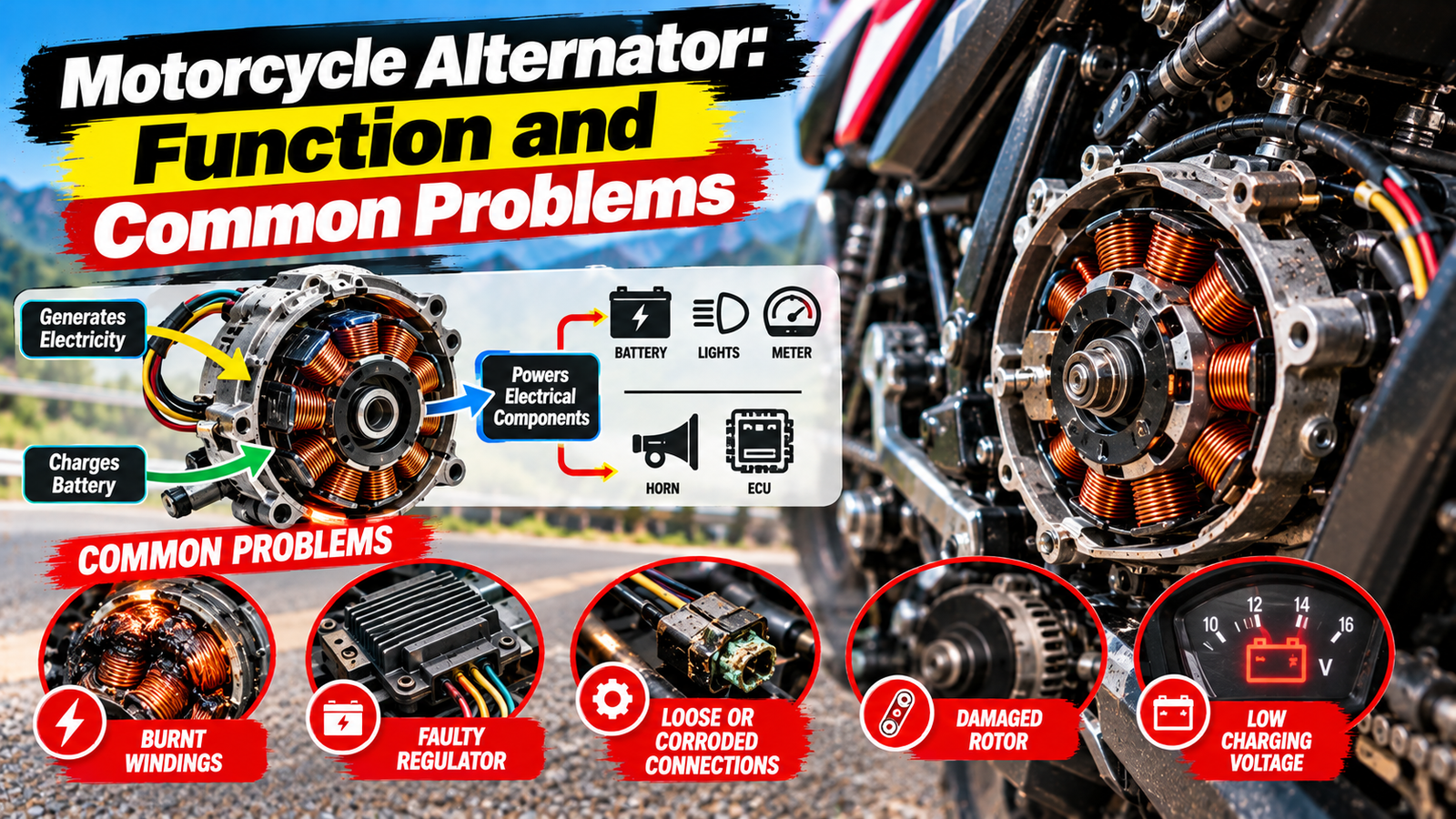
The motorcycle alternator is an important part of the electrical charging system. It helps generate electrical power while the engine is running and supplies energy to the motorcycle’s electrical equipment. It also helps recharge the battery so the motorcycle can start again after the engine has been switched off.
When the charging system works properly, the battery remains charged, and the electrical components receive the power they need. However, problems with the alternator or related components can lead to a weak battery, dim lights, starting difficulties, and other electrical issues.
In my opinion, riders should understand the basic function of the motorcycle alternator because charging problems are sometimes mistaken for battery failure. Replacing a battery without checking the charging system may not solve the problem.
In this article, I will explain how a motorcycle alternator works, the common signs of failure, possible causes, and the maintenance steps that can help identify electrical problems.
What Is a Motorcycle Alternator?
A motorcycle alternator is a component that generates electrical power using the engine’s mechanical movement. On many motorcycles, it is part of a system that includes a stator, rotor, regulator rectifier, battery, and associated wiring.
The exact design varies by motorcycle. Many modern motorcycles use a permanent magnet alternator, while some models use different charging arrangements.
The alternator generates electricity as the engine rotates. This electrical energy is then processed by the charging system so it can supply the motorcycle’s electrical loads and recharge the battery.
Without a functioning charging system, the battery may gradually discharge as the motorcycle uses electrical power.
How Does a Motorcycle Alternator Work?
On many motorcycles, the alternator contains two main parts called the stator and rotor.
The stator is the stationary part, usually containing electrical windings. The rotor rotates with the engine and provides a magnetic field.
As the rotor moves, the changing magnetic field induces electrical current in the stator windings. Many motorcycle alternators generate alternating current, commonly called AC.
The motorcycle’s regulator rectifier then converts the required AC output into direct current, or DC, and regulates the charging voltage for the electrical system.
The battery stores electrical energy, while components such as the ignition system, lighting, fuel injection system, and instruments use electrical power as required.
This arrangement allows the motorcycle to generate electricity while running instead of depending entirely on the battery.
Main Components of a Motorcycle Charging System
1. Stator
The stator contains stationary electrical windings. When the magnetic rotor rotates, these windings generate electrical power.
A damaged winding or electrical connection can reduce charging performance.
2. Rotor
The rotor rotates with the engine and produces the changing magnetic field needed for electricity generation.
Damage to the rotor or its magnetic components can affect alternator output.
3. Regulator Rectifier
The regulator rectifier converts AC into DC and controls the charging voltage. This helps protect the battery and electrical components from unsuitable voltage levels.
If the regulator rectifier fails, the battery may undercharge or the system may produce excessive voltage.
4. Battery
The battery stores electrical energy and supplies power for starting and other electrical requirements.
It works together with the charging system but does not generate electricity by itself.
5. Wiring and Connectors
Wires and connectors carry electricity between the alternator, regulator rectifier, battery, and other electrical components.
Loose, corroded, or damaged connections can interrupt charging even when the alternator itself is working correctly.
Common Signs of Motorcycle Alternator Problems
Charging system faults can produce several warning signs.
1. Battery Keeps Losing Charge
If the battery repeatedly becomes weak while riding or shortly afterward, the charging system may not be replenishing the battery properly.
However, an old battery, loose connections, or electrical leakage can produce similar symptoms.
Testing the battery and charging voltage can help identify the cause.
2. Dim or Flickering Lights
Headlights or instrument lights that become unusually dim or flicker may indicate unstable electrical supply.
The cause may involve the alternator, regulator rectifier, battery, wiring, or a faulty ground connection.
Because some motorcycles have lighting systems that behave differently depending on engine speed, compare the symptoms with the manufacturer’s guidance.
3. Difficulty Starting the Motorcycle
A weak battery can prevent the starter motor from turning the engine effectively.
If the charging system is not restoring battery power, the battery may become progressively weaker. The motorcycle may start normally after charging but fail again later.
Nevertheless, starting problems can also come from the starter motor, relay, ignition system, or other components.
4. Warning Lights or Electrical Errors
Some motorcycles display a battery or charging warning light when the electrical system detects a problem.
Modern motorcycles may also show instrument warnings or electronic system errors when voltage becomes too low or unstable.
Check the owner’s manual to understand what the warning means for your model. Do not ignore a persistent charging warning.
5. Overcharging or Unusually High Voltage
A charging system fault does not always cause low voltage. A failed regulator rectifier may allow charging voltage to become excessive.
Overcharging can damage the battery and sensitive electrical equipment. It may also cause battery heating, electrolyte loss in some battery designs, or physical swelling.
If you suspect overcharging, stop using the motorcycle until the charging system has been inspected.
Common Causes of Motorcycle Alternator Failure
Several issues can affect alternator performance.
Damaged stator windings: Heat, insulation deterioration, or electrical faults can damage the windings.
Rotor damage: Mechanical damage or a problem with the rotor’s magnetic components may affect power generation.
Regulator rectifier failure: The charging voltage may become too low, too high, or unstable.
Loose connectors: Poor electrical connections can interrupt the flow of current.
Corroded wiring: Corrosion can increase electrical resistance and reduce charging performance.
Excessive heat: Electrical components can deteriorate when exposed to temperatures beyond their design limits.
Mechanical damage: Problems involving the alternator mounting or related engine components can affect operation.
Correct diagnosis is important because replacing the alternator when the actual problem is a connector or regulator rectifier can lead to unnecessary expense.
How to Check a Motorcycle Alternator
Basic electrical checks can help identify a charging problem, but the correct procedure depends on the motorcycle.
First, inspect the battery terminals and charging system connectors for corrosion, looseness, or visible damage.
Second, check the battery’s resting voltage using a suitable multimeter and the manufacturer’s recommended testing procedure.
Third, measure charging voltage while the engine is running if the service instructions permit it. Compare the readings with the specifications for the particular motorcycle and operating conditions.
Fourth, a mechanic may test the stator output and winding resistance or continuity according to the manufacturer’s service manual.
These tests help distinguish a stator fault from a regulator rectifier problem, a damaged battery, or faulty wiring.
Do not disconnect the battery while the engine is running as a way to test the alternator. This can damage electrical components on many motorcycles.
How to Maintain the Motorcycle Charging System
The charging system usually requires less routine maintenance than many mechanical parts, but regular inspection remains important.
- Keep battery terminals clean and properly tightened.
- Inspect wiring and connectors for corrosion or heat damage.
- Check for repeated battery discharge.
- Investigate charging warning lights promptly.
- Use a battery compatible with the motorcycle’s charging system.
- Follow the manufacturer’s maintenance schedule.
- Have unusual charging voltage tested by a qualified mechanic.
If electrical components become excessively hot or a burning smell develops, stop using the motorcycle and arrange an inspection.
Frequently Asked Questions
Does a motorcycle alternator charge the battery?
Yes. The charging system generates electricity while the engine runs and uses regulated electrical power to recharge the battery and supply the motorcycle’s electrical equipment.
Can a motorcycle run with a faulty alternator?
Some motorcycles may continue running temporarily using the remaining battery charge, but the electrical system may eventually lose sufficient power. Electronic fuel injection and ignition systems can be particularly sensitive to low voltage.
Is the alternator the same as the regulator rectifier?
No. The alternator generates electrical power, while the regulator rectifier processes the output and controls the charging voltage. They work together but perform different functions.
How do I know whether the alternator or battery is faulty?
A battery test, charging voltage test, and appropriate stator and regulator rectifier checks can help distinguish the problem. Testing the complete system is more reliable than replacing parts based on symptoms alone.
Conclusion
The motorcycle alternator helps generate electricity while the engine runs and supports the battery charging system. Its main components work together to provide power for starting, lighting, ignition, and other electrical equipment.
In my opinion, the most important thing is to distinguish alternator problems from battery and wiring faults. Repeated battery discharge, dim lights, and charging warnings should be investigated rather than ignored.
Regular electrical inspections and correct diagnosis can prevent unnecessary replacement expenses and help keep the motorcycle reliable. If charging voltage is abnormal or the electrical system shows repeated problems, consult a qualified motorcycle mechanic.