Introduction
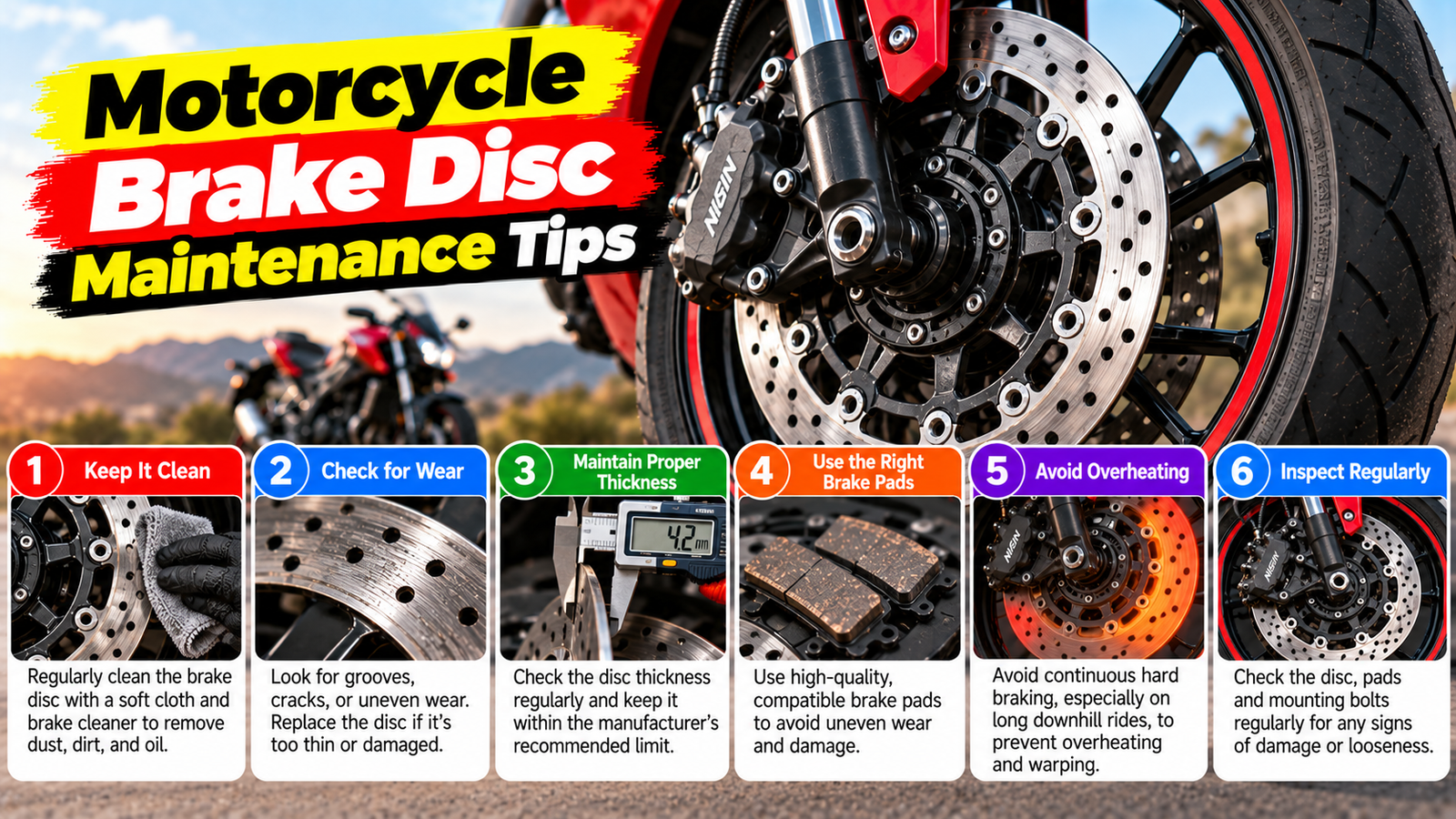
A motorcycle brake disc is an important part of the disc braking system. It rotates with the wheel and works with the brake pads to slow the motorcycle. Because it plays a direct role in stopping performance, keeping the brake disc in good condition is essential for safe riding.
Brake discs are designed to handle friction and heat, but they can still become worn, contaminated, or damaged over time. Regular inspection helps identify problems before they affect braking performance.
Motorcycle brake disc maintenance does not always require complicated work. Riders can perform basic visual checks and follow the service schedule, while repairs and measurements should be handled according to the manufacturer’s instructions. This guide explains practical tips for maintaining motorcycle brake discs.
1. Inspect the Brake Disc Regularly
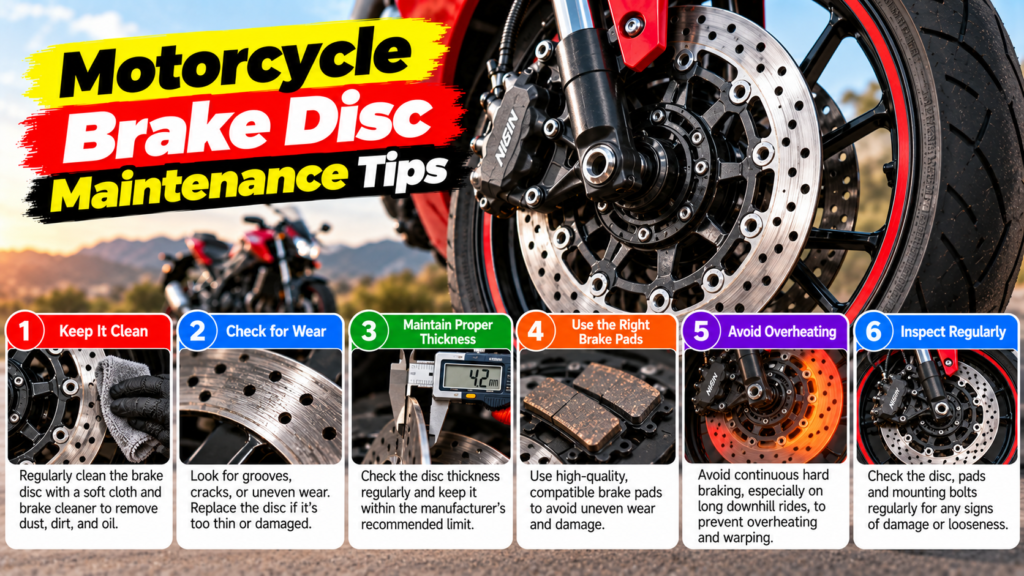
A simple visual inspection can help identify obvious brake disc problems.
Look for deep grooves, cracks, unusual discolouration, heavy corrosion, or visible damage. A disc may develop light surface marks through normal use, so not every mark means it needs replacement.
Check both sides of the disc when they are safely visible. Dirt or wear may not be equally noticeable from one angle.
If you see cracks, significant damage, or other serious defects, do not continue riding until the motorcycle has been inspected. A qualified mechanic can determine whether the disc is safe to use.
2. Check Brake Disc Thickness
Brake discs gradually become thinner as the brake pads create friction against their surfaces. Manufacturers specify a minimum thickness for each disc.
When the disc reaches or falls below this limit, it must be replaced. A disc that is too thin may not handle heat and braking loads as intended.
Thickness should be measured with a suitable measuring tool at the correct locations. Do not rely only on appearance or the amount of wear visible at the outer edge.
The manufacturer’s service manual provides the required measurement limits and inspection procedure. If you do not have the correct tools or specifications, ask a mechanic to measure the disc.
3. Keep Brake Discs Free From Oil and Grease
Oil, grease, chain lubricant, and other contaminants can reduce friction between the brake pads and disc. This may lead to weak braking, noise, or inconsistent performance.
Take care when lubricating the motorcycle chain or cleaning nearby components. Avoid spraying lubricants toward the wheel and brake assembly.
If a disc becomes contaminated, use a cleaner specifically approved for motorcycle brake components and follow the product instructions. Keep unsuitable solvents and oily cloths away from the braking surfaces.
Brake pads can absorb some contaminants, so cleaning the disc may not be enough to restore safe performance. Have contaminated pads inspected and replaced if necessary.
4. Use the Correct Brake Cleaner
Brake cleaner can remove certain residues from metal brake components, but the product must be suitable for the motorcycle’s materials.
Read the label before use and follow the manufacturer’s directions. Work in a well ventilated area and avoid contact with skin and eyes.
Do not apply household polish, oil based cleaners, or products that leave a slippery residue to the braking surface. Avoid spraying chemicals onto tyres, painted surfaces, or plastic components unless the product is confirmed safe for them.
Never use a cleaning method that could damage the disc or leave contamination behind.
5. Inspect Brake Pads Along With the Disc
Brake discs and pads work as a pair, so they should be checked together.
Worn pads can allow their metal backing plates to contact the disc, causing serious surface damage. Uneven pad wear may also indicate a sticking caliper or another mechanical issue.
Check the remaining friction material against the manufacturer’s minimum thickness. If the pads are worn or damaged, replace them with the correct type.
When installing new pads, inspect the disc for wear and confirm that it remains within its service limits. New pads should not be used to hide a damaged or unsuitable disc.
6. Avoid Unnecessary Hard Braking
Repeated heavy braking produces substantial heat. Although motorcycle brake discs are designed to manage heat, excessive or repeated high temperature use can accelerate wear and contribute to brake fade or component damage.
Anticipate traffic changes and slow down smoothly whenever possible. Keep a safe following distance and use the correct braking technique for the road and weather conditions.
On steep descents, avoid riding continuously with the brakes partially applied. Use a suitable gear and follow safe riding practices to control speed.
Good riding habits can help reduce unnecessary heat and extend the life of brake components.
7. Check for Disc Warping or Vibration
If the motorcycle vibrates during braking, the brake disc may be uneven, distorted, or affected by another problem. However, vibration can also come from tyre, wheel, suspension, or steering issues.
A disc that does not rotate evenly may create changes in braking force as it turns. A mechanic can check disc runout using the correct measuring equipment.
Do not assume that every vibration means the disc is warped. Proper diagnosis prevents unnecessary replacement and helps identify the actual fault.
If the vibration is strong or braking feels unpredictable, stop riding and arrange an inspection.
8. Look for Rust and Corrosion
Motorcycle brake discs may develop a light film of surface rust after exposure to rain or humidity, particularly when the motorcycle is parked.
In many cases, light surface rust clears during normal braking. However, deep corrosion, pitting, or damage that remains after normal use requires inspection.
Avoid trying to remove rust with aggressive grinding or unsuitable tools. These methods can damage the disc surface and affect braking performance.
If the motorcycle has been stored for a long time, inspect the brakes carefully before riding. Check for corrosion, sticking components, and other signs of deterioration.
9. Check the Caliper and Mounting Hardware
Brake disc maintenance also involves checking nearby components.
The caliper should be secure, and the brake pads should move as intended. Loose mounting hardware, sticking pistons, or seized sliding pins can lead to uneven braking and unusual disc wear.
Do not tighten brake mounting bolts by guesswork. These fasteners require the correct torque specifications and, in some cases, specific replacement hardware.
If any component is loose or damaged, have it repaired according to the manufacturer’s procedure before riding.
10. Follow the Correct Brake Disc Replacement Procedure
A brake disc should be replaced if it is below the minimum thickness, cracked, severely damaged, or otherwise outside the manufacturer’s service limits.
Use a disc that matches the motorcycle’s model and braking system. Differences in diameter, thickness, offset, mounting pattern, or material can affect compatibility.
During replacement, the wheel and mounting surfaces must be prepared correctly. Fasteners should be tightened to the specified torque, and any required new bolts or locking components should be installed.
If you are not experienced with brake repairs, professional installation is the safer choice.
11. Inspect the Brake System Before Long Trips
Before a long journey, check the brake disc, pads, fluid level, hoses, and controls. Look for leaks, unusual noises, or changes in lever feel.
Check the tyres at the same time because tyre grip has a major effect on stopping ability. Make sure the brake system has no obvious faults before carrying extra luggage or travelling on unfamiliar roads.
If you notice a problem, resolve it before the trip rather than hoping it will improve during the journey.
12. Understand When Professional Service Is Needed
Some brake maintenance can be performed through visual checks, but accurate disc measurements and repairs may require specialist tools.
Seek professional help if you notice cracks, severe scoring, unusual vibration, overheating, persistent noise, or reduced braking performance. A mechanic can inspect the disc, pads, caliper, wheel, and hydraulic system together.
Do not attempt to straighten a damaged disc or modify its surface unless the manufacturer specifically permits the procedure. Replacing a disc that is outside its limits is often necessary for safety.
Conclusion
Motorcycle brake disc maintenance helps protect braking performance and supports safer riding. Regular inspections, correct cleaning products, checking disc thickness, and examining brake pads can help identify wear before it becomes serious.
Avoid contamination, unnecessary heavy braking, and unapproved repairs. Follow the motorcycle manufacturer’s service schedule and use compatible replacement parts. If the disc is cracked, excessively worn, or causing unusual braking behaviour, have it inspected before riding again.