Introduction
Motorcycle brakes are essential for safe riding because they help control speed and bring the motorcycle to a stop. Two common types of motorcycle braking systems are disc brakes and drum brakes. Both systems use friction to slow down the wheel, but they work differently and have different advantages.
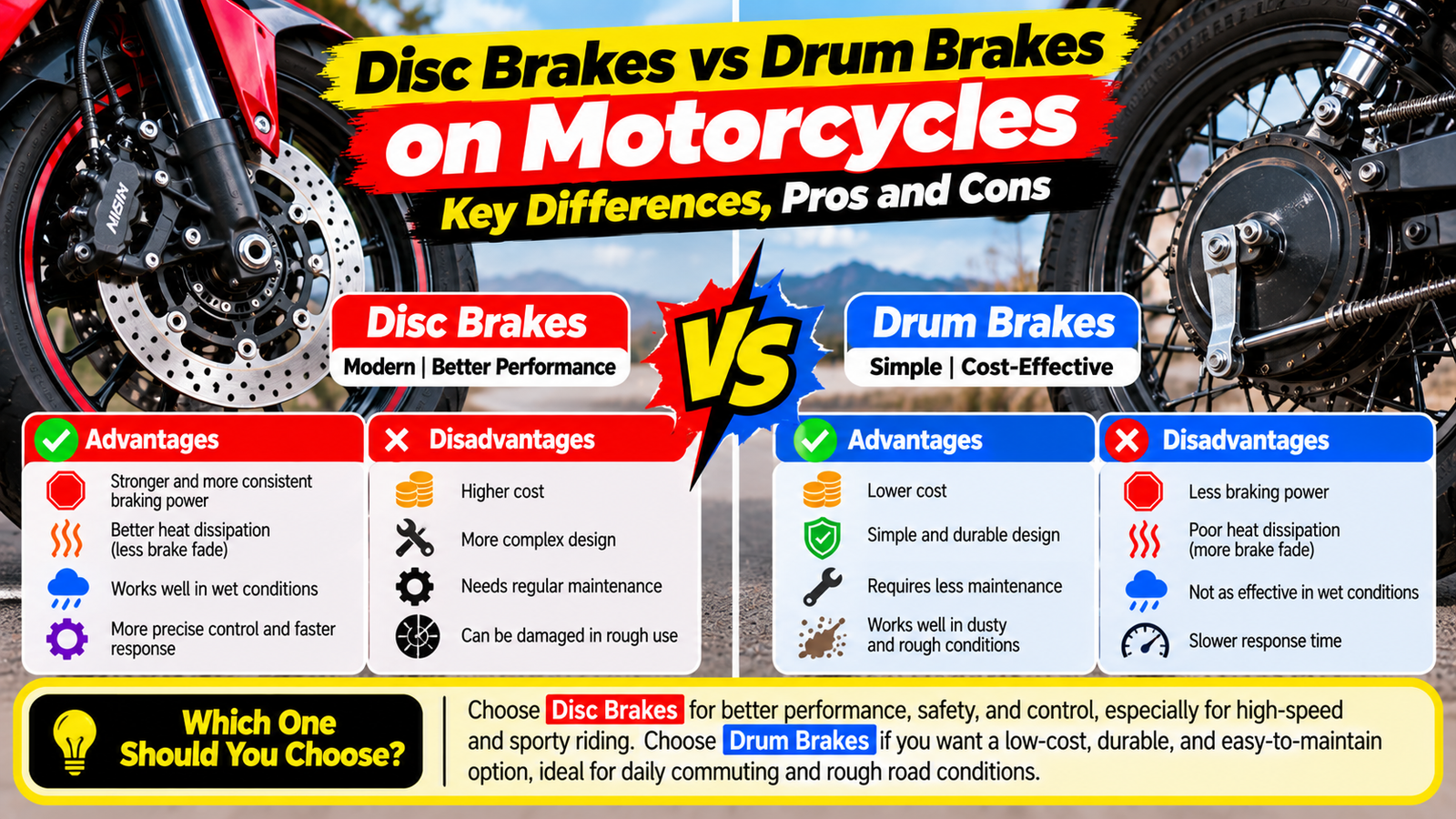
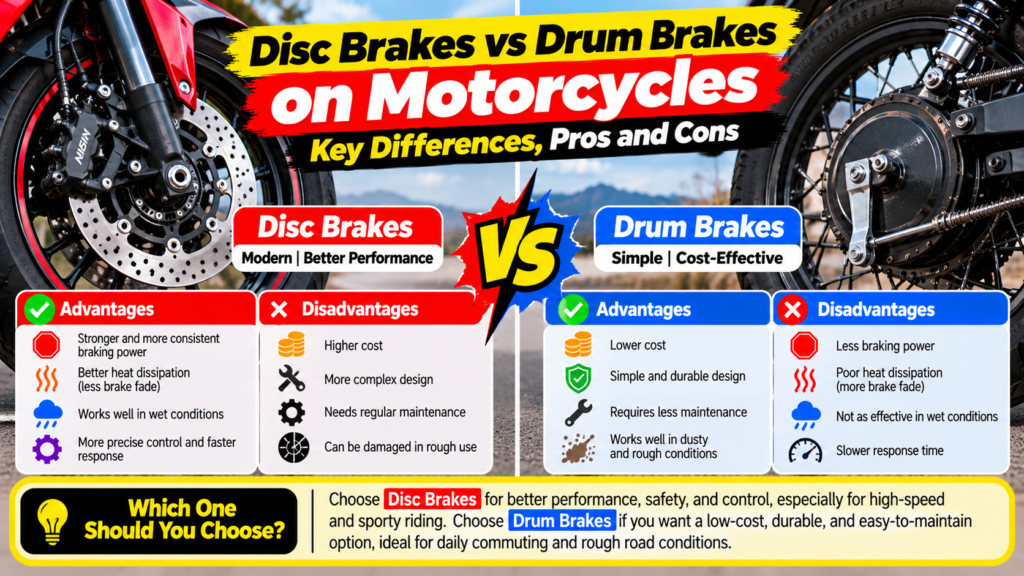
When comparing disc brakes vs drum brakes on motorcycles, riders should consider braking performance, maintenance, cost, durability, and riding conditions. Disc brakes are common on many modern motorcycles, especially on the front wheel, while drum brakes are still used on some commuter motorcycles and entry level models.
Understanding the difference between these systems can help riders make informed decisions when buying a motorcycle or maintaining an existing one.
What Are Motorcycle Disc Brakes?
Disc brakes use a flat metal disc attached to the wheel. A brake caliper holds friction pads on both sides of the disc.
When the rider applies the brake, hydraulic pressure or a mechanical mechanism pushes the pads against the rotating disc. The friction between the pads and disc reduces wheel speed.
Many modern motorcycles use hydraulic disc brakes because they provide consistent braking and allow effective heat management. The exact performance depends on the design, condition, and quality of the complete braking system.
Disc brakes are commonly found on the front wheel because strong front braking is important when a motorcycle slows down.
What Are Motorcycle Drum Brakes?
Drum brakes use a round metal drum that rotates with the wheel. Inside the drum are brake shoes with friction material.
When the rider presses the brake pedal or lever, a mechanism pushes the shoes outward against the inside surface of the drum. Friction between the shoes and drum slows the wheel.
Drum brakes may operate through cables, rods, or other mechanical linkages. They are often used on the rear wheels of smaller motorcycles because their construction can be relatively simple and economical.
Although drum brakes are less exposed to the outside environment than disc brakes, they can retain heat during repeated braking.
1. Braking Performance
One of the main differences between disc brakes and drum brakes is their braking performance under different conditions.
Disc brakes generally provide strong and consistent braking when properly designed and maintained. Their open construction helps heat escape, which is useful during repeated braking.
Drum brakes can provide adequate stopping power for many everyday riding situations. However, their performance may become less consistent when they become very hot, particularly during repeated heavy braking.
Actual stopping distance depends on several factors, including tyre grip, road surface, rider technique, motorcycle weight, speed, and brake condition. The type of brake alone does not determine how quickly a motorcycle will stop.
2. Heat Dissipation
Heat is produced whenever brake components create friction. Managing this heat is important because excessive temperatures can reduce braking performance.
Disc brakes are exposed to airflow, allowing heat to escape more easily. Some discs also use ventilation features or specific shapes to improve cooling.
Drum brakes have more enclosed components. This design protects the internal parts from direct exposure, but it can make heat removal more difficult during repeated heavy braking.
For riders who frequently travel through hilly areas or face repeated stops in traffic, heat management is an important consideration.
3. Maintenance Requirements
Both braking systems require regular inspection and maintenance.
Disc brake maintenance usually includes checking pad thickness, inspecting the disc, checking brake fluid, examining hoses, and making sure the caliper moves correctly.
Drum brake maintenance includes inspecting brake shoes, checking the drum surface, examining springs and linkages, and adjusting the brake according to the manufacturer’s instructions.
Disc brakes may be easier to inspect visually because the pads and disc are often accessible. Drum brakes may require removal of the drum or wheel to inspect internal components.
The amount of maintenance depends on the motorcycle model, riding conditions, component quality, and manufacturer’s schedule.
4. Cost Differences
Drum brake systems can be less expensive to manufacture, which is one reason they are used on some budget friendly motorcycles.
Disc brakes may have a higher initial cost because they use components such as a disc, caliper, pads, hydraulic lines, and a master cylinder. However, actual repair and replacement costs vary widely.
The cost of ownership depends on how frequently parts wear out, the availability of compatible components, and local labour charges.
When buying a motorcycle, it is useful to consider both the initial price and the long term cost of maintaining the braking system.
5. Performance in Wet Conditions
Rain and wet roads can affect motorcycle braking regardless of the system used.
Disc brakes are exposed to the environment, so water can reach the disc. Their open design often allows water to clear as the disc rotates and the brakes are applied.
Drum brakes are more enclosed, which can reduce direct exposure to water and dirt. However, moisture entering a drum can still affect braking performance until the internal surfaces dry.
Riders should apply brakes smoothly on wet roads and leave extra distance for stopping. Tyre condition and road grip are especially important in rainy weather.
6. Weight and Design
The weight and construction of a braking system depend on its size and design.
Drum brakes combine the drum and internal shoes in a relatively enclosed assembly. This arrangement can be practical for certain small motorcycles and utility focused designs.
Disc brakes use a separate disc and caliper. Depending on the design, they may be lighter or heavier than a comparable drum arrangement. It is not accurate to assume that every disc brake system is lighter than every drum brake system.
Manufacturers select braking components based on the motorcycle’s weight, performance, price, intended use, and safety requirements.
7. Brake Feel and Control
Disc brakes often provide a direct and predictable response when the system is properly maintained. Hydraulic systems can allow the rider to control braking force smoothly.
Drum brakes can also work effectively, but their feel depends on adjustment, shoe condition, and mechanical design. Poor adjustment may create excessive pedal travel or inconsistent response.
A rider should become familiar with the braking feel of their own motorcycle. Sudden changes in lever movement, pedal travel, noise, or stopping ability should be investigated.
8. Durability and Component Life
The lifespan of brake components depends on use and maintenance.
Disc brake pads wear down through friction and need periodic replacement. Brake discs can last longer than pads, but they may eventually become too thin, warped, or damaged.
Drum brake shoes also wear gradually. The drum itself may last a long time if it remains within the manufacturer’s wear limits and is not damaged.
Frequent heavy braking, carrying heavy loads, riding in dusty areas, and using poor quality replacement parts can increase wear in either system.
9. Which Brake System Is Better for City Riding?
For everyday city riding, both systems can be suitable when they are properly maintained and matched to the motorcycle.
Disc brakes may offer advantages where traffic involves frequent stops and starts, especially when good heat management and predictable braking are needed. Drum brakes can still provide adequate rear braking on many commuter motorcycles.
Riders should focus on the complete motorcycle rather than judging it by one component alone. Tyre quality, suspension, motorcycle weight, ABS availability, and overall maintenance also affect safety.
10. Which Brake System Is Better for Long Distance Riding?
Long distance riding can involve highways, steep roads, changing weather, and heavy traffic. Disc brakes may offer useful advantages during repeated braking because they generally dissipate heat effectively.
However, the suitability of a braking system depends on the motorcycle’s design and intended use. A well maintained drum brake may work adequately for its intended role, while a poorly maintained disc brake can still be unsafe.
Before a long trip, riders should check pad or shoe condition, brake fluid, discs or drums, tyres, and brake controls.
Can a Motorcycle Have Both Disc and Drum Brakes?
Yes. Many motorcycles use a front disc brake and a rear drum brake. This combination provides disc braking at the front while helping keep the motorcycle affordable.
Other motorcycles have disc brakes on both wheels. Some models also include ABS, which can help reduce the risk of wheel lock during hard braking.
The correct setup depends on the motorcycle’s design. Riders should not change the braking system without confirming compatibility, safety, and legal requirements.
Conclusion
When comparing disc brakes vs drum brakes on motorcycles, both systems have advantages and limitations. Disc brakes generally offer better heat dissipation and convenient visual inspection, while drum brakes can provide a practical and economical solution for many commuter motorcycles.
The best choice depends on the motorcycle, riding conditions, budget, and maintenance needs. Regardless of the system, regular inspection and correct servicing are essential. Safe braking also depends on tyre grip, rider technique, road conditions, and leaving enough space to stop.