Introduction
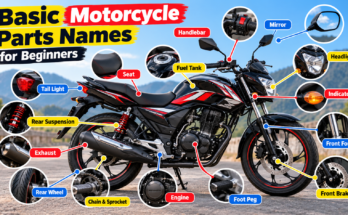
A motorcycle may look like a simple vehicle, but it contains many mechanical and electrical components that work together every time a rider starts the engine and moves onto the road. Each part has its own function, but the motorcycle cannot operate properly unless these parts work as a connected system.
Understanding how motorcycle parts work together is useful for beginners, motorcycle owners, and anyone interested in motorcycle maintenance. It helps explain why the engine needs a transmission, how power reaches the rear wheel, and why brakes, tires, and suspension are essential for safe riding.
In my opinion, learning about the connection between motorcycle components is just as important as learning their individual names. When you understand how one part affects another, it becomes easier to recognize unusual behavior and explain problems to a mechanic.
In this guide, I will explain how the main motorcycle parts work together, from starting the engine to moving, turning, and stopping.
1. The Engine Produces Power
The engine is the starting point of the motorcycle’s power system. In a petrol motorcycle, the engine burns a mixture of fuel and air to produce mechanical energy.
Most four stroke motorcycle engines complete four basic stages: intake, compression, power, and exhaust. During these stages, air and fuel enter the cylinder, the mixture is compressed, combustion produces force, and exhaust gases leave the cylinder.
The piston’s movement is transferred through a connecting rod to the crankshaft. The crankshaft converts the piston’s up and down movement into rotational movement.
This rotation provides the power needed to drive the motorcycle.
However, the engine alone cannot manage every riding situation. The motorcycle also needs a clutch, gearbox, and final drive system to deliver engine power to the rear wheel at a useful speed and level of force. <Cite refs={[“turn377467search12″,”turn377467search3”]} />
2. The Fuel and Air Systems Support the Engine
The engine needs fuel and air to produce power. These supplies are managed by the motorcycle’s fuel delivery and air intake systems.
The fuel tank stores petrol, while the fuel system delivers it to the engine. Depending on the motorcycle, fuel delivery may be controlled by a carburetor or an electronic fuel injection system.
The air filter cleans incoming air by trapping dust and other particles before they reach the engine.
The fuel and air must be supplied in suitable proportions for the engine to operate properly. If the air filter becomes clogged or the fuel system develops a fault, the motorcycle may experience difficult starting, uneven running, or reduced performance.
The ignition system also plays an important role in petrol engines. The spark plug ignites the compressed mixture at the appropriate time.
These components work together to help the engine produce consistent power.
3. The Clutch Controls Power Delivery
After the engine produces rotational power, the clutch helps control how that power reaches the transmission.
On a conventional manual motorcycle, the clutch is operated using a lever on the left handlebar. Pulling the lever disengages the clutch, temporarily interrupting the transfer of engine power to the gearbox.
Releasing the lever allows the clutch to engage and transmit power again.
This is particularly important when starting from a stationary position. The rider can gradually release the clutch while applying suitable throttle, allowing the motorcycle to begin moving smoothly.
The clutch also helps during gear changes. It reduces the load passing through the transmission while the rider selects another gear.
If the clutch is worn or incorrectly adjusted, the motorcycle may struggle to transfer power efficiently. For example, a slipping clutch can allow engine speed to increase without a matching increase in road speed.
4. The Gearbox Adjusts Speed and Torque
The gearbox works with the engine and clutch to provide different gear ratios.
Motorcycles need different amounts of driving force for different situations. Starting from a stop requires a different gear ratio from travelling at a steady speed on an open road.
Lower gears generally provide greater torque multiplication at the rear wheel, making them useful for starting and accelerating at lower speeds. Higher gears are generally more suitable for faster travel when the engine and road conditions allow.
The rider selects gears using the gear shift pedal on most manual motorcycles.
When the gear changes, the transmission alters the relationship between engine rotation and the output shaft. This allows the engine to operate within a useful range while the motorcycle changes speed.
Without a suitable transmission, a motorcycle would be much less practical because the engine would have difficulty operating effectively across the full range of riding speeds. <Cite refs={[“turn377467search0″,”turn377467search7”]} />
5. The Chain and Sprockets Transfer Power to the Rear Wheel
Once power passes through the gearbox, it must reach the wheel that drives the motorcycle forward.
Many motorcycles use a chain and sprocket system for this purpose.
The gearbox output shaft turns the front sprocket. The chain connects this sprocket to the rear sprocket, which is attached to the rear wheel. As the chain moves, it rotates the rear sprocket and drives the wheel.
This process converts the engine’s power into the force that moves the motorcycle along the road.
Chain condition is important because the entire power transfer system depends on proper engagement between the chain and sprockets.
A chain that is too loose, too tight, poorly lubricated, or excessively worn can cause noise, uneven movement, and additional wear.
Not every motorcycle uses a chain. Some models use a belt drive or shaft drive, but the basic purpose remains the same: transferring power to the driving wheel.
6. The Rear Tire Moves the Motorcycle Forward
The rear wheel receives power through the final drive system. However, the motorcycle moves forward because the tire interacts with the road surface.
When the powered rear tire pushes against the road, the road provides a forward force that moves the motorcycle.
Tire grip is essential for transferring driving force effectively. If the road is slippery or the tire has insufficient grip, the rear wheel may lose traction.
Tire pressure, tread condition, road surface, weather, and riding behavior can all influence traction.
This explains why engine power is only one part of motorcycle performance. A powerful engine cannot provide useful acceleration if the tire cannot maintain suitable contact with the road.
Riders should check tire pressure and condition regularly and use tires that match the motorcycle’s specifications.
7. The Front Wheel and Steering System Control Direction
While the rear wheel commonly provides driving force, the front wheel plays a major role in steering.
The handlebars connect to the steering assembly, allowing the rider to guide the front wheel. The front forks support the wheel and form part of the front suspension system.
At ordinary riding speeds, steering a motorcycle involves a combination of handlebar input, balance, and leaning. The rider must coordinate these actions according to speed, road conditions, and the shape of the turn.
The frame provides the main structural support that keeps the motorcycle’s major components connected in the correct arrangement.
If steering bearings, forks, or other steering components become damaged or excessively loose, the motorcycle may become difficult to control.
For this reason, steering problems should be inspected rather than ignored.
8. Suspension Helps Keep the Motorcycle Stable
The suspension system connects the wheels to the motorcycle while allowing them to move over bumps and uneven surfaces.
The front suspension commonly uses forks, while the rear may use one or two shock absorbers.
When a wheel passes over a bump, the suspension compresses and extends to manage the movement. This reduces the impact transferred to the rider and helps the tire maintain contact with the road.
Suspension works closely with the tires, frame, and steering system. These components all contribute to stability and handling.
If the suspension is worn or damaged, the motorcycle may bounce excessively, feel unstable, or respond poorly on uneven roads.
Correct maintenance is important for comfort as well as control.

9. The Braking System Slows the Motorcycle
The braking system allows the rider to reduce speed and stop.
Most motorcycles have front and rear brakes. Depending on the design, they may use disc brakes, drum brakes, or a combination of both.
When the rider applies a brake control, the braking mechanism creates friction that slows the rotating wheel. In hydraulic disc brakes, brake fluid transfers pressure from the control mechanism to the caliper, causing the pads to press against the disc.
The front brake often provides a large proportion of the stopping force during firm braking because the motorcycle’s weight shifts forward as it slows.
However, both brakes have important roles, and riders should learn how their specific motorcycle responds.
The tires and brakes must also work together. Even well maintained brakes cannot provide effective stopping if the tires have poor grip on the road.
Worn brake pads, damaged discs, leaks, or unusual brake lever movement should be checked promptly.
10. The Battery and Electrical System Support Operation
The electrical system helps the motorcycle start and powers several important components.
The battery commonly supplies electricity to the starter motor, lights, horn, dashboard, and control systems. Once the engine is running, the charging system replenishes the battery and supplies electrical power as required.
Many modern motorcycles also use electronic fuel injection and an engine control unit. These systems rely on electrical power and sensor information to manage engine operation.
A weak battery can cause slow starting or prevent the electric starter from operating. Charging system faults can lead to repeated battery discharge.
The headlight, tail light, brake light, and turn indicators also depend on the electrical system. These components help the rider see and communicate intentions to other road users.
Checking the electrical system is therefore an important part of motorcycle maintenance.
11. The Exhaust System Removes Combustion Gases
After combustion occurs inside the engine, the resulting gases must be removed.
The exhaust system carries these gases away from the engine. It generally includes exhaust pipes and a muffler, while many modern motorcycles also contain an emissions control device such as a catalytic converter.
The exhaust system helps manage noise and, where fitted, reduces certain harmful emissions.
It also works alongside the engine’s intake and combustion systems. Leaks, blockages, or other exhaust problems can affect noise levels and may influence engine performance.
Because exhaust components can become extremely hot, riders should avoid touching them until they have cooled.
12. The Frame Connects the Main Components
The frame is the motorcycle’s primary structural foundation. It supports the engine, steering assembly, suspension, seat, and other major components.
The frame works with the suspension and wheels to provide structural strength and predictable handling.
The position and mounting of the engine, steering components, and suspension influence how the motorcycle responds to acceleration, braking, and turning.
A damaged frame can affect alignment and stability. Following a serious crash or impact, a professional inspection may be necessary to identify structural problems that are not immediately visible.
This is why the frame should not be considered merely an outer support. It is an essential part of the motorcycle’s overall design.
13. How All Motorcycle Parts Work Together While Riding
To understand the complete process, imagine starting a motorcycle and riding away.
First, the battery supplies electrical power to the starting and control systems. The starter motor turns the engine, allowing the engine’s fuel, air, and ignition systems to begin producing power.
Next, the rider selects a gear and gradually engages the clutch. Engine power passes through the gearbox and then through the final drive system.
On a chain driven motorcycle, the chain turns the rear sprocket, which rotates the rear wheel. The tire transfers driving force to the road, moving the motorcycle forward.
During the ride, the rider uses the throttle to control acceleration and the gearbox to select suitable ratios. The steering system guides the front wheel, while the tires and suspension help maintain contact with the road.
When the rider slows down, the braking system reduces wheel rotation. The frame supports the connected components throughout the process, while the electrical system continues operating lights and other equipment.
Each stage depends on several components working together. A problem in one system can affect the behavior of another.
14. Why Understanding Motorcycle Parts Is Important
Understanding how motorcycle parts work together offers several practical benefits.
First, it helps motorcycle owners communicate more clearly with mechanics. Instead of describing only a general problem, a rider may be able to explain whether an issue appears related to starting, shifting, braking, or power delivery.
Second, this knowledge helps with basic maintenance. Riders can learn to inspect tires, check lights, observe chain condition, and notice unusual sounds or leaks.
Third, understanding the system can help when buying replacement motorcycle parts. It is important to choose components that match the motorcycle’s make, model, year, and specifications.
Finally, it encourages safer riding. Knowing the purpose of the brakes, tires, steering, and suspension helps riders understand why regular inspections matter.
Basic knowledge does not replace professional repairs, especially when dealing with engines, transmissions, brakes, or structural components. It simply helps owners make better informed decisions.
Conclusion
Motorcycle parts work together as a connected system. The engine produces power, the clutch and gearbox control its delivery, and the final drive transfers that power to the rear wheel. The tires provide grip, while the steering system, suspension, frame, and brakes help the rider control the motorcycle.
The electrical system supports starting, lighting, and other functions, while the fuel, air, and exhaust systems help the engine operate properly.
In my opinion, learning these connections is one of the most useful steps for a new motorcycle owner. It builds confidence, makes maintenance easier to understand, and helps riders recognize when professional attention may be needed.
Regular inspections, suitable replacement parts, and responsible riding habits help keep these systems working together as intended.
Frequently Asked Questions
How do motorcycle parts work together?
The engine produces power, the clutch and gearbox manage it, and the final drive transfers it to the rear wheel. The tires, steering, suspension, brakes, and electrical system support movement and control.
Which motorcycle parts are responsible for movement?
The engine produces power, the transmission adjusts how it is delivered, and the final drive transfers it to the driving wheel. The tire then transfers force to the road.
Why are the clutch and gearbox important?
The clutch connects or disconnects engine power from the transmission, while the gearbox provides different gear ratios for starting, accelerating, and travelling at different speeds.
How do motorcycle brakes work with tires?
The brakes slow the rotating wheels through friction. The tires transfer the braking force to the road, so tire condition and road grip affect how effectively the motorcycle can stop.
What should I check regularly on my motorcycle?
Check tire pressure and condition, brakes, lights, chain condition where applicable, visible fluid leaks, and other items listed in the owner’s manual. Have unusual noises or handling problems inspected by a qualified mechanic.