Introduction
A motorcycle is a popular means of transportation because it is easy to use, affordable compared to many cars, and suitable for daily travel. People use motorcycles to go to work, attend school, travel between cities, and complete everyday tasks. Although motorcycles may look simple from the outside, they contain many different parts that work together to provide movement, balance, comfort, and safety.
Understanding the different parts of a motorcycle and their functions is useful for every rider. In my opinion, knowing the basic components of a motorcycle can help riders understand how their bikes operate and recognize common problems before they become serious. It can also make regular maintenance easier and help people communicate more effectively with motorcycle mechanics.
In this article, I will explain the main parts of a motorcycle, their functions, and why each component is important for the overall performance of the bike.
1. Motorcycle Engine
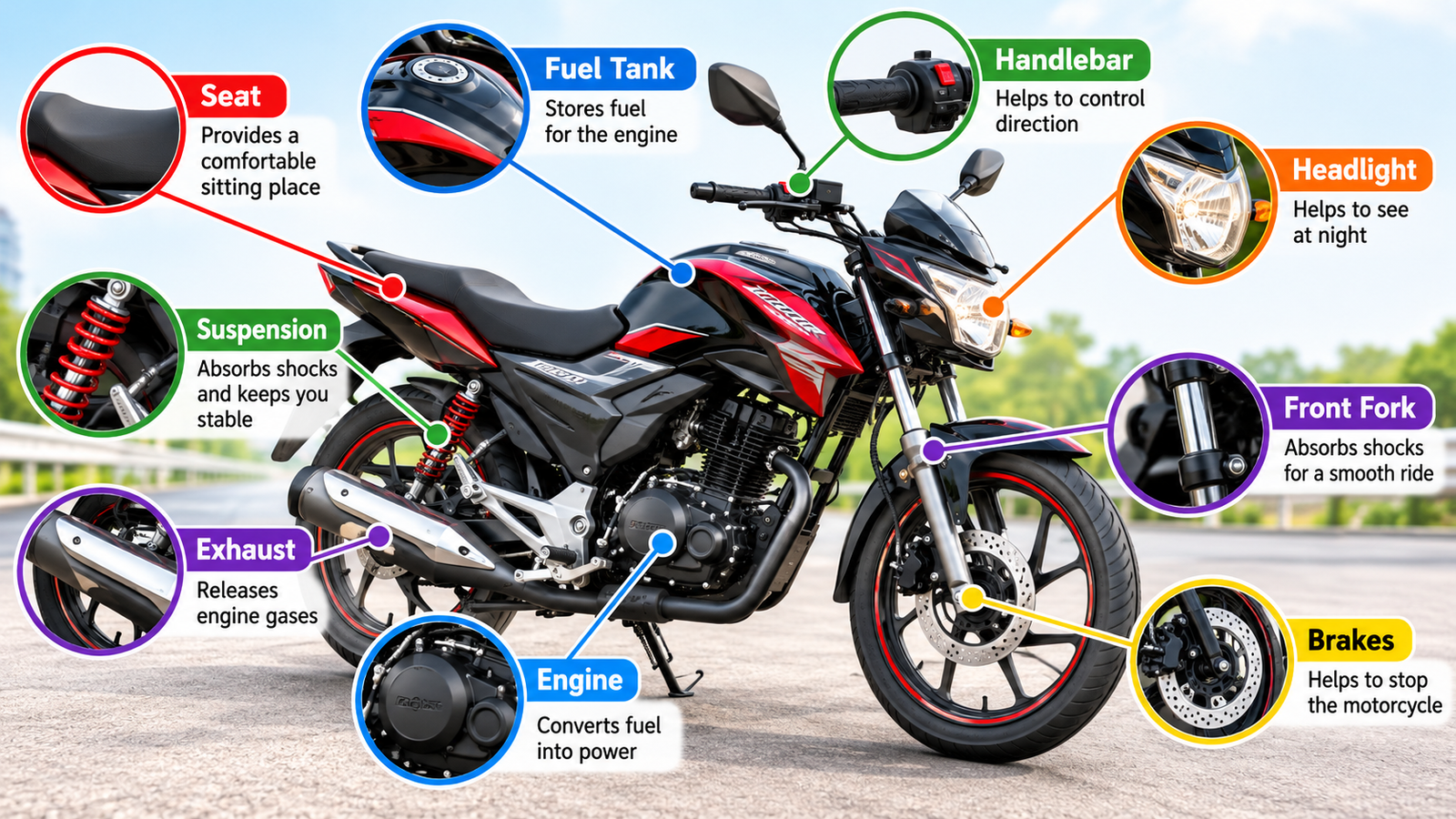
The engine is one of the most important parts of a motorcycle because it produces the power needed to move the bike. Most traditional motorcycles use petrol engines that burn fuel to generate mechanical energy.
When the engine operates, fuel and air enter the combustion chamber, where combustion creates pressure that moves the internal engine components. This movement eventually turns the transmission and rear wheel.
Motorcycle engines are available in different sizes, commonly measured in cubic centimeters, or CC. Smaller engines are generally suitable for daily commuting and fuel efficiency, while larger engines can provide more power for higher performance and longer journeys.
Regular engine maintenance is essential. Checking the engine oil, keeping the air filter clean, and following the manufacturer’s service schedule can help maintain reliable performance.
2. Fuel Tank
The fuel tank stores petrol required by the motorcycle engine. It is usually positioned above the engine, where the rider can easily access the fuel cap.
The size of the fuel tank affects how far a motorcycle can travel before needing to refuel. A larger tank can provide a longer riding range, although actual fuel consumption depends on engine size, riding conditions, speed, and maintenance.
Most motorcycles have a fuel gauge or warning indicator that helps riders monitor the remaining fuel. Some older or simpler models use a manual fuel tap with different settings.
Keeping the fuel tank clean and using the recommended fuel helps support proper engine operation. Riders should also avoid overfilling the tank and should always close the fuel cap securely.
3. Carburetor or Fuel Injection System
The carburetor or fuel injection system supplies the engine with the correct mixture of fuel and air.
A carburetor mixes fuel with air mechanically before the mixture enters the engine. It is commonly found on older motorcycles and some basic models.
Modern motorcycles increasingly use electronic fuel injection, which controls fuel delivery through injectors and electronic sensors. This system can adjust fuel delivery according to engine conditions, helping improve fuel efficiency, starting performance, and emissions control.
Both systems perform the same basic purpose, but their designs and methods of operation are different. Proper maintenance helps prevent starting difficulties, poor acceleration, and irregular engine performance.
4. Clutch
The clutch connects and disconnects the engine from the transmission. It allows the rider to change gears smoothly and control the transfer of power to the rear wheel.
On a manual motorcycle, the rider usually operates the clutch through a lever on the left handlebar. Pulling the lever temporarily disengages the engine from the transmission, allowing a gear change. Releasing it gradually reconnects the power.
The clutch is especially important when starting from a stop, changing gears, and moving slowly through traffic.
Riders should avoid holding the clutch partially engaged for long periods because excessive slipping can cause unnecessary wear and heat. Correct clutch adjustment and proper riding habits can extend its service life.
5. Gearbox and Transmission
The gearbox allows the rider to select different gear ratios according to riding speed and engine load. It helps the motorcycle move away from a stop, climb hills, and maintain suitable engine speed while travelling.
Most conventional motorcycles have several forward gears operated through a foot lever. The gearbox works with the clutch to transfer engine power efficiently to the drivetrain.
Lower gears provide greater pulling force at lower speeds, while higher gears are suitable for faster travel when conditions allow.
Changing gears at appropriate engine speeds can improve riding comfort and reduce unnecessary strain on the engine. The transmission design varies between manual, automatic, and semi automatic motorcycles.
6. Chain and Sprockets
The chain and sprockets transfer power from the transmission to the rear wheel on many motorcycles.
The front sprocket receives power from the gearbox output shaft. The chain carries this power to the rear sprocket, which turns the rear wheel and moves the motorcycle forward.
A motorcycle chain requires regular cleaning, lubrication, and tension adjustment. A chain that is too loose can create noise or come off, while one that is too tight can damage drivetrain components.
The sprockets should also be checked for worn or damaged teeth. Replacing a worn chain and sprockets when necessary helps maintain smooth power delivery and improves riding safety.
Some motorcycles use a belt drive or shaft drive instead of a chain, but the purpose remains similar: transferring power to the driven wheel.
7. Front and Rear Wheels
The wheels support the motorcycle and allow it to move along the road. Most motorcycles have two wheels, with the front wheel primarily responsible for steering and the rear wheel commonly receiving engine power.
The front wheel follows the rider’s steering input, while the rear wheel provides traction on motorcycles with rear wheel drive.
Wheel condition has a direct effect on stability, handling, and braking. Bent rims, damaged spokes, loose wheel bearings, or incorrect tire pressure can affect the way a motorcycle behaves.
Riders should regularly inspect both wheels and follow the manufacturer’s recommended tire pressure specifications.
8. Motorcycle Tires
Tires provide contact between the motorcycle and the road. They are essential for acceleration, braking, cornering, and maintaining balance.
Motorcycle tires come in different designs for road riding, touring, off road use, and sport riding. Each type is designed to provide suitable grip and performance under particular conditions.
Tire pressure is especially important. Underinflated tires can increase heat buildup, rolling resistance, and handling problems. Overinflated tires can reduce the contact area and affect comfort and grip.
Checking tire pressure, inspecting tread depth, and looking for cracks, cuts, or embedded objects should be part of regular motorcycle maintenance.
Good tires cannot eliminate every road hazard, but they help the motorcycle maintain better contact with the road when properly maintained.
9. Braking System
The braking system allows the rider to slow down or stop the motorcycle safely. Most motorcycles use front and rear brakes, although the specific designs vary by model.
Disc brakes use brake pads that press against a rotating metal disc to create friction. Drum brakes use brake shoes that press against the inside surface of a drum.
The front brake usually provides a large share of the motorcycle’s stopping force during normal firm braking because weight transfers toward the front wheel as the motorcycle slows down.
Some motorcycles also have an anti lock braking system, known as ABS. ABS helps prevent the wheels from locking during hard braking under suitable operating conditions.
Brake pads, brake fluid, cables, discs, and other components should be inspected according to the manufacturer’s recommendations. Any unusual brake noise, reduced braking power, or fluid leakage should be checked promptly.
10. Suspension System
The suspension system absorbs bumps and helps keep the tires in contact with the road. It also improves comfort and supports stable handling.
The front suspension commonly consists of telescopic forks. These allow the front wheel to move upward and downward when the motorcycle passes over uneven surfaces.
The rear suspension often uses one or two shock absorbers connected to the frame and swingarm.
A properly functioning suspension system makes riding more comfortable and helps maintain control on rough roads. Worn suspension components can cause excessive bouncing, reduced stability, and uneven tire wear.
Regular inspection is important, especially for motorcycles that frequently travel on damaged roads or carry heavy loads.

11. Handlebar
The handlebar is the main steering control of a motorcycle. It allows the rider to guide the front wheel and maintain the desired direction.
The handlebar also holds important controls, including the throttle, brake lever, clutch lever on manual motorcycles, switches, and sometimes a display or instrument cluster.
A properly positioned handlebar helps the rider maintain a comfortable posture and control the motorcycle with less strain.
Loose handlebar fittings or damaged steering components can affect control. Riders should make sure the handlebar moves smoothly and that the cables do not become stretched or trapped during steering.
12. Throttle
The throttle controls the amount of power requested from the engine. It is generally operated by twisting the right handgrip.
When the rider opens the throttle, the engine management system or carburetor responds by increasing the fuel and air supply as required. This allows the engine to produce more power.
Closing the throttle reduces the power being produced, although the motorcycle may continue moving due to its momentum.
The throttle should move smoothly and return to its closed position when released. If it sticks, feels unusually tight, or fails to return properly, the motorcycle should be inspected before further riding.
Correct throttle control is particularly important when starting, accelerating, turning, and travelling on slippery roads.
13. Battery
The battery supplies electrical energy for starting and operating many motorcycle electrical systems.
Depending on the model, it powers the electric starter, lights, horn, dashboard, electronic fuel injection system, and other electrical components. It also works with the charging system to maintain an appropriate electrical supply while the engine is running.
A weak battery can cause slow starting, dim lights, or electrical problems. Battery terminals should be kept clean and secure, and the battery should be tested if starting difficulties occur repeatedly.
Battery maintenance requirements vary by battery type. Riders should follow the manufacturer’s instructions rather than applying the same maintenance method to every battery.
14. Headlight and Tail Light
The headlight illuminates the road ahead and helps other road users notice the motorcycle. It is particularly important when riding at night, during poor visibility, or in shaded areas.
The tail light makes the motorcycle visible from behind. A brighter brake light warns following drivers when the rider applies the brakes.
Motorcycles may use halogen, LED, or other lighting technologies depending on their design.
Both front and rear lights should be checked regularly. A broken headlight or brake light can reduce visibility and increase the risk of an accident.
Riders should also make sure that their lights are adjusted correctly and comply with local road regulations.
15. Exhaust System
The exhaust system carries combustion gases away from the engine and directs them outside the motorcycle.
It commonly includes an exhaust pipe and a muffler. The muffler reduces the noise produced by exhaust gases, while the overall exhaust system helps manage gas flow and emissions.
Some motorcycles also contain a catalytic converter that helps reduce harmful exhaust pollutants.
A damaged or leaking exhaust can create excessive noise, affect engine performance, and expose the rider to dangerous exhaust gases. Loose exhaust fittings and unusual sounds should be inspected by a qualified mechanic.
Keeping the exhaust system in good condition helps the motorcycle operate more safely and comply with applicable noise and emissions requirements.
16. Frame and Chassis
The frame is the main structural foundation of a motorcycle. It supports the engine, suspension, fuel tank, seat, and other components.
A strong and properly designed frame helps maintain the motorcycle’s structural integrity and handling characteristics.
The chassis includes the frame and related structural and running components that contribute to the motorcycle’s overall layout.
Damage to the frame from a serious accident can affect alignment and stability. For this reason, suspected structural damage should be examined by a qualified professional rather than repaired through guesswork.
17. Seat and Footrests
The seat provides a place for the rider to sit and may also accommodate a passenger. Its shape, padding, and height affect riding comfort.
Footrests allow the rider to position their feet securely while controlling the motorcycle. Passenger footrests provide similar support for someone riding behind the driver.
A comfortable seat and suitable footrest position can make daily commuting and longer journeys easier.
Loose footrests, damaged seat mounts, or an unstable passenger seat should be repaired before use.
18. Side Stand and Center Stand
The side stand supports the motorcycle when it is parked. It folds down to one side and is commonly used for quick stops and everyday parking.
A center stand, when fitted, lifts the motorcycle into a more upright position. It can make certain maintenance tasks easier, such as cleaning or lubricating a chain.
Both stands should be stable and move freely. Some motorcycles have a side stand safety switch that prevents the engine from operating under certain conditions when the stand is down.
Before riding away, the rider should confirm that the stand is fully retracted.
19. Air Filter
The air filter prevents dust, dirt, and other particles from entering the engine with the incoming air.
A clean air filter supports efficient combustion and helps protect internal engine components from contamination.
A clogged filter can restrict airflow and may reduce performance or fuel efficiency. However, the exact symptoms depend on the engine and fuel system.
The filter should be inspected and cleaned or replaced according to the manufacturer’s service schedule. Riders who travel frequently on dusty roads may need more frequent inspections.
20. Spark Plug
The spark plug produces the electrical spark that ignites the compressed air and fuel mixture in a petrol engine.
A properly functioning spark plug is essential for reliable starting and smooth engine operation. Worn, damaged, or incorrectly specified spark plugs can contribute to misfiring, difficult starting, and poor performance.
Spark plugs should be checked and replaced at the recommended service intervals. The correct plug type and gap specification depend on the motorcycle model.
21. Instrument Cluster and Speedometer
The instrument cluster provides information that helps the rider monitor the motorcycle while travelling.
Depending on the model, it may display speed, engine RPM, fuel level, warning lights, gear position, odometer readings, and trip distance.
The speedometer helps the rider maintain an appropriate speed, while warning indicators can alert the rider to problems such as low oil pressure or a charging system fault.
Riders should understand the meaning of the main warning lights in their motorcycle’s owner’s manual. Ignoring an important warning may allow a small problem to become a costly repair.
22. Cooling System
The cooling system prevents the engine from becoming excessively hot during operation.
Air cooled motorcycles release engine heat through cooling fins and airflow. Liquid cooled motorcycles circulate coolant through passages in the engine and usually use a radiator to release heat.
Maintaining the correct engine temperature helps protect internal components and supports reliable performance.
For liquid cooled motorcycles, coolant levels and hoses should be inspected according to the manufacturer’s instructions. Riders should never open a hot cooling system because pressurized coolant can cause serious burns.
Air cooled engines also require suitable airflow and proper maintenance to manage heat.
Tips for Maintaining Motorcycle Parts
Understanding motorcycle parts is only the first step. Regular maintenance is equally important for keeping a motorcycle reliable and safe.
Here are some useful maintenance habits:
- Check engine oil at the recommended intervals.
- Inspect tire pressure and tread condition regularly.
- Test the front and rear brakes before riding.
- Clean and lubricate the chain when required.
- Check the headlights, indicators, horn, and brake light.
- Inspect the air filter according to the service schedule.
- Pay attention to unusual noises, vibrations, or fluid leaks.
- Follow the owner’s manual for servicing and replacement intervals.
- Use suitable replacement parts and the recommended fluids.
- Ask a qualified mechanic to inspect serious mechanical or electrical problems.
These simple habits can help identify problems early and reduce the chance of unexpected breakdowns.
Conclusion
The different parts of a motorcycle and their functions are closely connected. The engine produces power, the transmission transfers it, the wheels and tires provide movement and road contact, and the braking and suspension systems help the rider maintain control. Other components, including the battery, lights, frame, cooling system, and steering controls, contribute to the motorcycle’s overall operation.
In my view, every motorcycle owner should have a basic understanding of these components, even if they do not plan to repair the motorcycle themselves. This knowledge makes it easier to recognize warning signs, follow a maintenance routine, and discuss repairs with a mechanic.
A motorcycle can provide dependable transportation for many years when it is ridden responsibly and maintained properly. Learning about its main components is a practical first step toward safer riding, better maintenance decisions, and a more confident ownership experience.
Frequently Asked Questions
1. What are the main parts of a motorcycle?
The main parts include the engine, fuel tank, clutch, gearbox, chain or other final drive, wheels, tires, brakes, suspension, handlebar, battery, frame, exhaust, and electrical system.
2. Which motorcycle part produces power?
The engine produces the power needed to move the motorcycle. It converts energy from fuel into mechanical energy that is transmitted to the driven wheel.
3. What is the function of a motorcycle clutch?
The clutch connects and disconnects engine power from the transmission. It allows the rider to change gears smoothly and start moving in a controlled manner.
4. Why is motorcycle maintenance important?
Regular maintenance helps improve reliability, identify worn components, maintain performance, and reduce the risk of mechanical failure. It also supports safer riding.
5. What is the difference between a motorcycle carburetor and fuel injection?
A carburetor mechanically mixes fuel and air, while a fuel injection system delivers fuel through injectors and controls its supply according to operating conditions. Fuel injection commonly provides more precise fuel control.
6. Which motorcycle parts should be checked before riding?
Riders should check the tires, brakes, lights, indicators, mirrors, throttle operation, and visible signs of damage or fluid leakage. They should also confirm that the side stand is retracted before moving.