Introduction
Motorcycle brake pads are essential parts of a disc braking system. They create friction against the brake disc to reduce wheel speed when the rider applies the brakes. As the pads are used, their friction material gradually becomes thinner and eventually needs replacement.
Knowing how to identify worn motorcycle brake pads is important for every rider. Worn pads may reduce braking performance, damage the brake disc, and increase the risk of an accident if they are ignored.
Brake pads do not always wear at the same rate. Their lifespan depends on riding habits, traffic conditions, motorcycle weight, pad material, and maintenance. In this guide, I will explain the common warning signs of worn brake pads and how to inspect them safely.
1. Check the Brake Pad Thickness
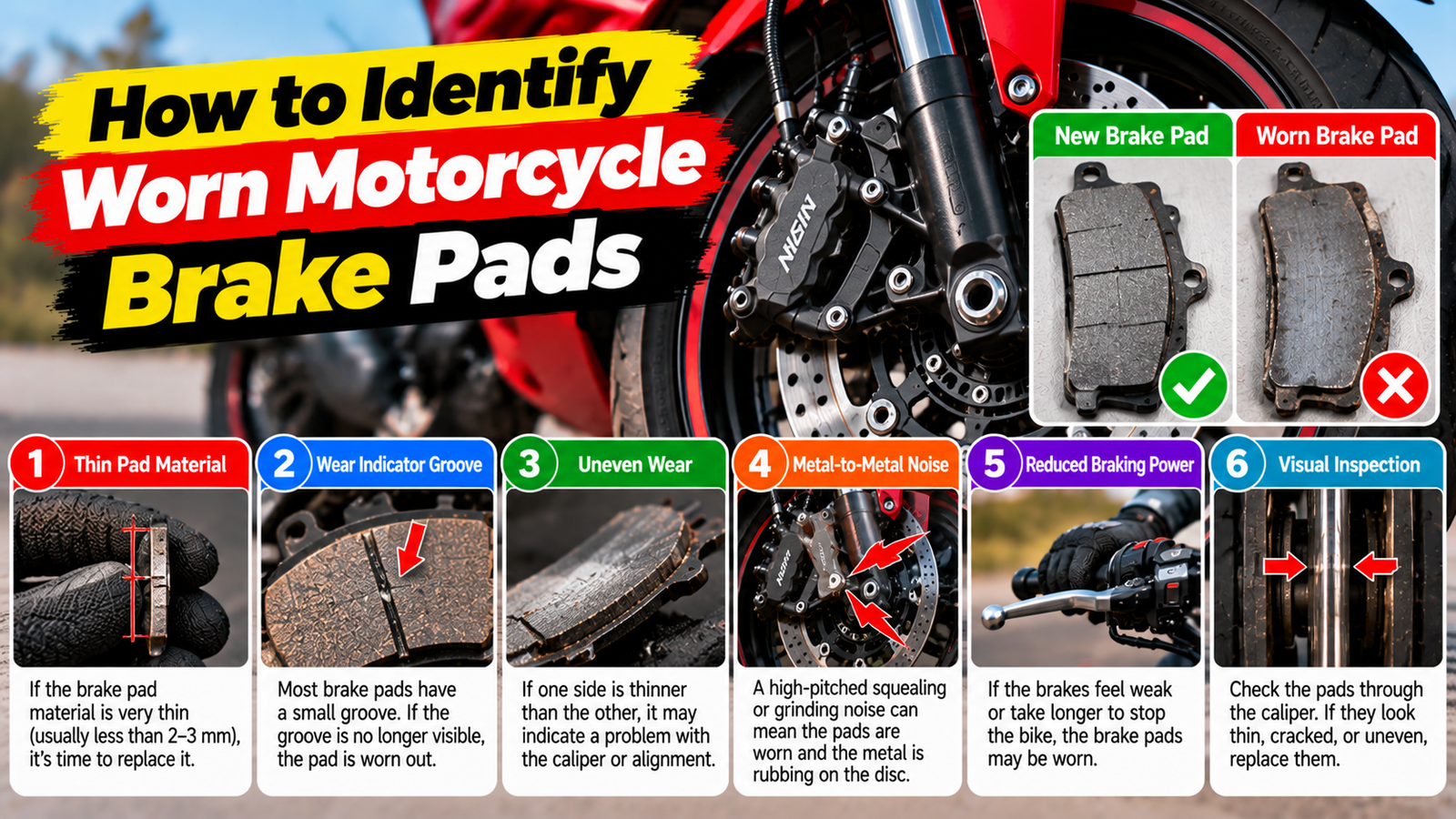
The most direct way to identify worn motorcycle brake pads is to inspect the remaining friction material.
Disc brake pads contain a friction layer attached to a metal backing plate. As the pads wear down, this layer becomes thinner. Many motorcycle manufacturers specify a minimum permitted thickness.
Look through the opening in the caliper if the pad design allows it. Compare the visible friction material with the manufacturer’s minimum thickness specification. Do not mistake the metal backing plate for usable friction material.
If the pads have reached the specified wear limit, replace them. If the thickness cannot be checked confidently, ask a qualified mechanic to inspect the system.
2. Listen for Unusual Braking Sounds
Unusual sounds can indicate that brake pads need attention.
A high pitched squeal may occur when pads are worn, contaminated, glazed, or vibrating against the disc. However, some pads can make noise even when they still have sufficient material.
A harsh grinding sound is more serious. It may indicate that the friction material has worn away and metal parts are contacting the disc. Continuing to ride can damage the disc and reduce braking performance.
If grinding occurs, stop riding as soon as it is safe and arrange an inspection. Do not assume that every noise means the pads are worn, but never ignore a sudden change in braking sound.
3. Notice Changes in Braking Performance
Worn or damaged pads can affect the way a motorcycle slows down.
You may notice that the motorcycle takes longer to reduce speed or that the brakes do not respond as expected. This can also be caused by contaminated pads, old brake fluid, a damaged disc, tyre problems, or another fault.
Brake performance should be checked if the motorcycle feels different during normal braking. Avoid testing a suspected fault at high speed or in traffic.
If stopping ability is significantly reduced, do not continue riding. Have the braking system inspected before using the motorcycle again.
4. Inspect the Brake Disc
The brake disc can provide useful clues about pad condition.
Look for deep grooves, unusual scoring, cracks, discolouration caused by excessive heat, or other visible damage. A damaged disc may produce noise, vibration, or inconsistent braking.
Some surface marks can develop through normal use, so appearance alone does not determine whether a disc needs replacement. The disc must be checked against the manufacturer’s thickness and condition limits.
If the pads have worn down to the metal backing plates, the disc may also be damaged. In this situation, replacing the pads alone may not solve the problem.
5. Watch for Uneven Brake Pad Wear
Brake pads should be inspected on both sides of the caliper where possible. Uneven wear can indicate a problem with caliper movement, piston operation, disc condition, or installation.
For example, one pad may become much thinner than the other. This can happen when a caliper slide sticks or a piston does not move correctly.
Uneven wear should not be ignored because it may affect braking performance and cause replacement pads to wear quickly again.
A mechanic should identify and correct the underlying cause before fitting new pads.
6. Look for Brake Dust and Contamination
Brake dust is a normal result of friction, but excessive dirt or oily contamination can affect braking.
Oil, grease, chain lubricant, or unsuitable cleaning products should never reach brake pads or discs. Contaminated pads may have reduced friction and can cause noise or inconsistent braking.
Do not try to solve serious contamination by simply wiping the exposed surface. Some materials can soak into the friction compound and may not be safely removed.
If the pads are contaminated, have them inspected and replaced if necessary. The source of the contamination should also be repaired or cleaned using an approved procedure.
7. Check for Excessive Heat
Brake pads and discs become warm during normal use. However, excessive heat can be a sign of a dragging brake or repeated heavy braking.
Warning signs may include a burning smell, smoke, discolouration, or a wheel that does not rotate freely when it should. A hot brake assembly should not be touched because it can cause burns.
If a brake is overheating, stop in a safe location and allow the motorcycle to cool. Do not pour water on hot brake components. Have the system inspected before riding again if the problem is unusual or persistent.
8. Understand Brake Lever and Pedal Changes
Changes in brake lever or pedal feel can indicate a problem, although they do not always mean the pads are worn.
A spongy hydraulic brake lever may indicate air in the system, old fluid, or a leak. Excessive pedal travel on a drum brake may be related to adjustment or shoe wear.
Worn disc brake pads can sometimes change the fluid level in the reservoir as the caliper pistons move outward to compensate for pad wear. However, a low fluid level can also indicate a leak and should never be treated as proof that the pads simply need replacing.
If the lever suddenly feels soft, sinks under pressure, or travels much farther than usual, have the system checked immediately.
9. Check the Motorcycle Maintenance History
A maintenance record can help you estimate when the pads may need inspection, but mileage alone is not a reliable way to decide when to replace them.
Riders who frequently travel through heavy traffic may use their brakes more often than riders who travel on open roads. Carrying heavy loads, riding on steep routes, and using aggressive braking can also increase wear.
Follow the inspection intervals in the owner’s manual. If you do not know when the pads were last replaced, arrange an inspection rather than assuming they are still in good condition.
10. How to Inspect Motorcycle Brake Pads Safely
Before checking brake pads, park the motorcycle on stable ground and switch off the engine. Allow the brakes to cool if the motorcycle has recently been ridden.
Use the owner’s manual to locate the brake components and understand the approved inspection method. A flashlight may help you see the friction material, but do not place fingers near moving parts or attempt to dismantle the caliper unless you have the necessary skills.
Never squeeze a hydraulic brake lever after removing the caliper or pads unless you are following the correct service procedure. Doing so can push the caliper pistons out of position.
If inspection requires wheel removal, caliper removal, or brake servicing, use the correct tools and torque specifications or consult a qualified mechanic.
When Should Motorcycle Brake Pads Be Replaced?
Brake pads should be replaced when they reach the manufacturer’s minimum thickness, become damaged, or are contaminated in a way that makes them unsafe.
Replace pads with components specified for the motorcycle. Avoid mixing incompatible pad types or installing new pads without checking the disc and caliper condition.
After replacement, the brakes may need a bedding in procedure according to the pad manufacturer’s instructions. During this period, avoid unnecessary hard braking and follow the recommended process.
Conclusion
Identifying worn motorcycle brake pads begins with checking friction material thickness and looking for warning signs such as grinding sounds, reduced braking performance, uneven wear, and disc damage. Changes in brake lever feel or signs of overheating also deserve attention.
Regular inspections help riders find problems before they become more serious. If braking performance suddenly changes or the pads appear damaged, do not continue riding until the motorcycle has been checked. Correct parts, proper installation, and routine maintenance help keep the braking system dependable.