A motorcycle suspension system helps provide a controlled and comfortable ride by managing the movement of the wheels over uneven road surfaces. It also plays an important role in handling, braking stability, and tyre contact with the road. When the suspension is working correctly, the motorcycle generally feels predictable and responds properly to bumps and changes in road conditions.
However, motorcycle suspension components can wear out or become damaged over time. If the problem is ignored, it may affect comfort, tyre wear, and riding safety.
In my opinion, riders should pay attention to changes in how their motorcycle feels rather than waiting until a suspension component completely fails. Recognising the signs your motorcycle suspension needs repair can help prevent additional damage and identify problems early.
In this article, I will explain the common suspension warning signs, their possible causes, and when professional repair may be necessary.
What Is a Motorcycle Suspension System?
The motorcycle suspension system connects the wheels to the main structure of the motorcycle while allowing controlled movement over bumps and uneven surfaces.
Its main components commonly include front forks, rear shock absorbers, springs, suspension linkages, bushings, and associated mounting hardware. The exact design varies between motorcycles.
The suspension system has several functions. It helps absorb road impacts, controls wheel movement, supports the motorcycle’s weight, and helps the tyres maintain contact with the road.
When suspension components become worn, the motorcycle may feel unusually soft, excessively hard, unstable, or noisy.
1. Excessive Bouncing After Hitting a Bump
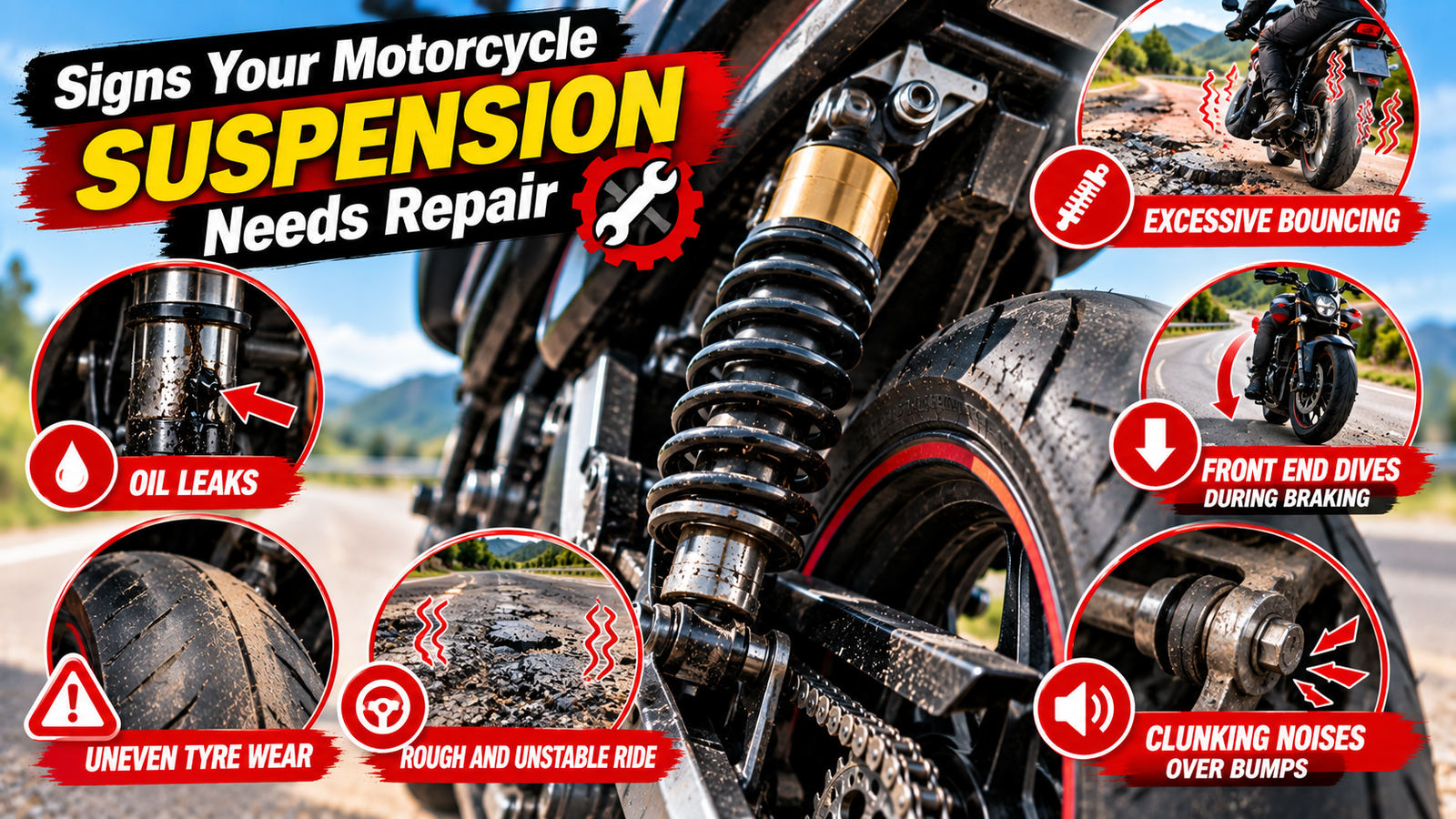
One of the most noticeable signs of motorcycle suspension problems is excessive bouncing after the motorcycle crosses a bump.
The suspension spring compresses when the wheel encounters an impact. Afterward, the shock absorber controls the return movement. If damping performance becomes poor, the motorcycle may continue bouncing instead of settling quickly.
This can make the ride uncomfortable and may reduce stability on uneven roads.
However, excessive bouncing does not always mean the shock absorber is faulty. Incorrect suspension settings, unsuitable spring rates, or other worn components may create similar symptoms.
If the motorcycle suddenly begins bouncing more than usual, have the suspension inspected.
2. Oil Leakage From Front Forks or Rear Shock Absorbers
Oil leakage is another important warning sign.
Many motorcycle front forks and rear shock absorbers use hydraulic oil to control suspension movement. Seals help keep the oil inside the components.
When a seal becomes worn or damaged, oil may leak onto the fork tube or shock absorber body.
On front forks, leaked oil may spread around the fork legs. In serious cases, it can reach nearby components, including the brakes, creating an immediate safety concern.
A small amount of dirt or surface residue is not always evidence of a leak, but repeated oily marks should be investigated.
Do not ignore suspension oil leakage. Have the affected components inspected and repaired according to the motorcycle manufacturer’s recommendations.
3. Unusual Knocking or Clunking Sounds
A healthy motorcycle suspension system should operate without persistent abnormal knocking or clunking noises.
If you hear a metallic sound when crossing bumps, braking, or moving the motorcycle, the cause may involve worn suspension bushings, loose mounting hardware, damaged linkages, or another component.
The noise may also originate from the steering head bearings, wheel bearings, brake components, or other parts of the motorcycle.
Try to notice when the sound occurs, but do not attempt to identify the exact fault through sound alone.
If the knocking is new, repeated, or accompanied by unstable handling, arrange a mechanical inspection.
4. Poor Handling and Unstable Cornering
Suspension problems can affect the way a motorcycle responds when turning.
A worn shock absorber or damaged suspension component may allow excessive movement, making the motorcycle feel less controlled during cornering.
Riders may notice that the motorcycle feels unsettled on uneven roads or requires more effort to maintain a consistent line.
However, handling problems can also result from incorrect tyre pressure, worn tyres, wheel alignment issues, or steering bearing problems.
If your motorcycle suddenly feels unstable, reduce your speed, stop in a safe place when possible, and check for obvious problems. Do not continue riding normally until a serious handling concern has been assessed.
5. Excessive Front Fork Diving During Braking
Some front suspension compression is normal when a motorcycle slows down because weight shifts toward the front wheel.
However, excessive or poorly controlled front end diving may indicate a suspension issue.
Possible causes include worn damping components, incorrect suspension settings, unsuitable springs, or internal fork problems.
Riders may notice that the front end compresses too quickly or feels unstable during braking.
Before assuming the forks need replacement, remember that braking technique, motorcycle design, and suspension settings influence how much the front end moves.
If the behaviour changes significantly or affects control, have the front suspension inspected by a qualified mechanic.
6. Uneven Motorcycle Tyre Wear
Uneven tyre wear can sometimes indicate a suspension problem.
When suspension components fail to control wheel movement properly, the tyre may experience irregular contact with the road. This can contribute to unusual tread wear under certain conditions.
For example, a damaged shock absorber may allow repeated bouncing, while worn suspension linkages can affect wheel control.
However, suspension is only one possible cause. Incorrect tyre pressure, wheel imbalance, alignment problems, and aggressive riding can also produce irregular wear patterns.
If your motorcycle tyres wear unevenly despite correct pressure and normal use, ask a mechanic to inspect the suspension and related components.
7. A Harsh or Uncomfortable Ride
A motorcycle suspension system should be appropriate for the bike’s design, the rider’s weight, and the intended road conditions.
If the motorcycle suddenly feels much harder over bumps, the suspension may not be moving correctly.
Possible causes include incorrect preload settings, seized suspension components, damaged fork parts, or unsuitable suspension adjustments.
Tyre pressure also has a significant effect on comfort. Before assuming the suspension is faulty, check the tyre pressure using the manufacturer’s recommended figures.
If the ride remains unusually harsh, a professional inspection can help determine whether adjustment, repair, or replacement is required.
8. The Rear of the Motorcycle Sags Too Much
The rear suspension supports the motorcycle and helps accommodate the rider and any passenger or luggage.
If the rear of the motorcycle sits unusually low, the cause may include an incorrect preload setting, a worn spring, excessive loading, or damaged suspension components.
A motorcycle that sits too low may have reduced ground clearance and altered steering behaviour.
First, check the manufacturer’s load limits and suspension adjustment instructions. Some motorcycles allow preload adjustment to accommodate different loads.
If the rear remains excessively low under normal conditions, have the suspension inspected rather than attempting an improvised repair.
9. Front Forks Feel Stiff or Do Not Move Smoothly
Front forks should move smoothly through their intended range. If they stick, bind, or feel unusually stiff, the problem may involve damaged fork tubes, contaminated or incorrect fork oil, worn bushings, or internal component damage.
Bent fork tubes can also affect steering and suspension movement, particularly after an accident or a significant impact.
Do not force a damaged fork to move or continue riding if steering feels restricted.
A qualified mechanic can inspect the fork alignment, seals, bushings, and internal components to determine the correct repair.
10. Visible Damage to Suspension Components
Visible damage should always be taken seriously.
Inspect the motorcycle for bent fork tubes, cracked mounting points, damaged springs, badly corroded components, loose fasteners, or broken suspension linkages.
Some defects may be difficult to see without removing components, so a visual check cannot replace professional inspection.
If you notice obvious structural damage, stop riding and arrange appropriate repairs. Suspension components carry significant loads, and improvised repairs can create serious safety risks.
Common Causes of Motorcycle Suspension Problems
Motorcycle suspension problems can develop for several reasons.
Normal wear: Springs, seals, bushings, and damping components gradually wear through use.
Poor road conditions: Repeated impacts from potholes and rough surfaces place additional stress on the suspension.
Excessive loading: Carrying more weight than the motorcycle is designed for can affect suspension performance.
Poor maintenance: Ignoring leaks, damaged seals, or unusual noises can allow small problems to become more serious.
Incorrect adjustment: Improper preload or damping settings may make the suspension feel too soft or too hard.
Accidents and impacts: A collision or severe impact can bend or damage suspension components.
Understanding these causes can help riders make better maintenance decisions and avoid unnecessary component replacement.
How to Maintain Motorcycle Suspension
Regular maintenance can help keep the motorcycle suspension in good condition.
- Inspect front forks and rear shock absorbers for oil leaks.
- Check for visible damage, corrosion, and loose mounting hardware.
- Pay attention to new noises and changes in handling.
- Follow the manufacturer’s suspension service schedule.
- Keep the motorcycle within its recommended load limits.
- Use the correct tyre pressure because tyres and suspension work together.
- Have worn bushings, bearings, and suspension components checked by a qualified mechanic.
Do not disassemble pressurised shock absorbers or attempt repairs that require specialist equipment unless you have the appropriate training.
Can You Ride a Motorcycle With Bad Suspension?
The answer depends on the problem, but serious suspension faults should not be ignored.
Minor adjustment issues may sometimes be corrected through proper setup. However, leaking shock absorbers, damaged fork tubes, loose suspension hardware, or unstable handling can make riding unsafe.
If the motorcycle feels difficult to control, the wheel movement is restricted, or a component appears damaged, stop riding and arrange an inspection.
Continuing to use a motorcycle with a serious suspension fault may increase the risk of losing control and can cause additional damage.
Frequently Asked Questions
How do I know if my motorcycle shock absorbers are worn?
Common warning signs include excessive bouncing, oil leakage, poor handling, unusual noises, and changes in suspension response. A mechanic can confirm whether the shock absorbers are worn.
Can bad motorcycle suspension cause tyre wear?
Yes. Poor suspension performance can contribute to irregular tyre wear, although incorrect pressure, alignment, and wheel imbalance are also common causes.
Should I replace both rear shock absorbers together?
On motorcycles equipped with twin rear shocks, replacing both as a matched pair is often advisable when one has failed or both are similarly worn. Follow the manufacturer’s recommendations and use compatible components.
Is motorcycle suspension repair expensive?
The cost depends on the motorcycle model, the type of suspension, the damaged parts, labour charges, and whether repair or replacement is required. Basic adjustments may cost less than replacing complete shock absorbers or fork assemblies.
Conclusion
The main signs your motorcycle suspension needs repair include excessive bouncing, oil leakage, unusual noises, poor handling, excessive front fork diving, uneven tyre wear, and visible component damage.
In my opinion, riders should never ignore sudden changes in suspension performance. A motorcycle that feels different from normal may need more than a simple adjustment, so identifying the cause is important.
Regular inspections, correct loading, proper tyre pressure, and timely maintenance can help keep the suspension working as intended. If you notice serious damage or unstable handling, arrange a professional inspection before continuing to ride.
A properly maintained motorcycle suspension system supports comfort, predictable handling, and reliable contact between the tyres and the road.