Introduction
A motorcycle clutch plate is an important part of the clutch assembly. It helps transfer engine power to the transmission when the rider engages the clutch. The clutch also allows the rider to disconnect engine power temporarily when changing gears or stopping.
When the clutch works correctly, gear changes are easier and the motorcycle accelerates smoothly. However, clutch plates can wear over time because of friction, heat, heavy use, and incorrect riding habits.
In my opinion, recognizing the signs of a damaged motorcycle clutch plate can help riders avoid further mechanical problems. Many clutch issues begin with small changes in acceleration, gear shifting, or clutch lever feel. Ignoring these symptoms may lead to more extensive repairs.
In this article, I will explain the common symptoms of clutch plate damage, the possible causes, and the maintenance practices that can help extend clutch life.
What Is a Motorcycle Clutch Plate?
A motorcycle clutch plate is part of the mechanism that connects and disconnects the engine from the transmission.
Many motorcycles use a wet multi plate clutch, which contains several friction plates and steel plates operating in engine oil. Other motorcycles use different clutch arrangements, including dry clutches.
Friction plates have surfaces designed to create the friction needed to transfer power. Steel plates provide the opposing surfaces within the clutch pack.
When the clutch is engaged, springs press the plates together, allowing engine power to pass to the transmission.
When the rider pulls the clutch lever, the mechanism separates the plates enough to interrupt or reduce power transfer.
This allows the rider to change gears and stop without necessarily switching off the engine.
Over time, friction plates can wear, become damaged, or lose their ability to transfer power effectively.
1. Clutch Slipping During Acceleration
Clutch slipping is one of the most common signs of worn or damaged clutch plates.
When the clutch slips, the engine speed may increase without a matching increase in motorcycle speed. This is particularly noticeable during acceleration or when climbing a hill.
For example, you may twist the throttle and hear the engine rev higher, but the motorcycle does not accelerate as strongly as expected.
Worn friction plates are a possible cause because they may no longer provide enough friction to transfer engine power effectively.
However, slipping can also result from incorrect clutch cable adjustment, damaged clutch springs, or unsuitable oil in motorcycles with a wet clutch.
Check the owner’s manual for the correct clutch free play and engine oil specification.
If slipping continues after basic adjustments are verified, the clutch assembly should be inspected by a qualified mechanic.
2. Difficulty Changing Gears
A damaged or incorrectly adjusted clutch can make gear changes difficult.
You may notice that the gear lever feels unusually stiff, the transmission does not shift smoothly, or the motorcycle becomes difficult to place in neutral while stationary.
These symptoms can occur when the clutch does not disengage fully.
Possible causes include incorrect cable adjustment, warped clutch plates, worn components, or problems with the clutch release mechanism.
Transmission problems can also cause difficult shifting, so the clutch should not automatically be blamed.
Check the clutch lever free play and follow the maintenance instructions for the motorcycle.
If gear changes remain difficult or the motorcycle moves forward significantly while the clutch lever is fully pulled, arrange an inspection.
3. Motorcycle Jerks When Releasing the Clutch
A motorcycle that jerks when the clutch is released may have a clutch engagement problem.
The motorcycle may move unevenly when starting from a stop, even when the rider releases the lever gradually.
Possible causes include damaged or warped clutch plates, uneven friction surfaces, worn clutch springs, or problems with the clutch basket.
Incorrect adjustment and unsuitable engine oil may also affect clutch operation in certain motorcycles.
However, jerking is not always caused by the clutch. Chain slack, worn sprockets, engine misfiring, and poor throttle control can create similar symptoms.
Check the motorcycle’s service history and inspect related components before replacing the clutch plates.
If the problem becomes frequent or severe, professional diagnosis can help identify the actual cause.
4. Burning Smell From the Clutch Area
A burning smell during riding can sometimes indicate excessive clutch friction and heat.
This may happen when the clutch slips repeatedly or is held partially engaged for extended periods.
For example, keeping the clutch lever partly pulled while accelerating can generate unnecessary heat and accelerate wear.
In severe cases, excessive heat can damage friction material and affect other clutch components.
However, a burning smell can also originate from electrical components, leaking oil contacting hot engine parts, or other sources.
If you notice a strong burning smell along with slipping or loss of power, stop somewhere safe and allow the motorcycle to cool.
Avoid continuing to ride with a clutch that appears to be overheating. Arrange an inspection to determine the cause.
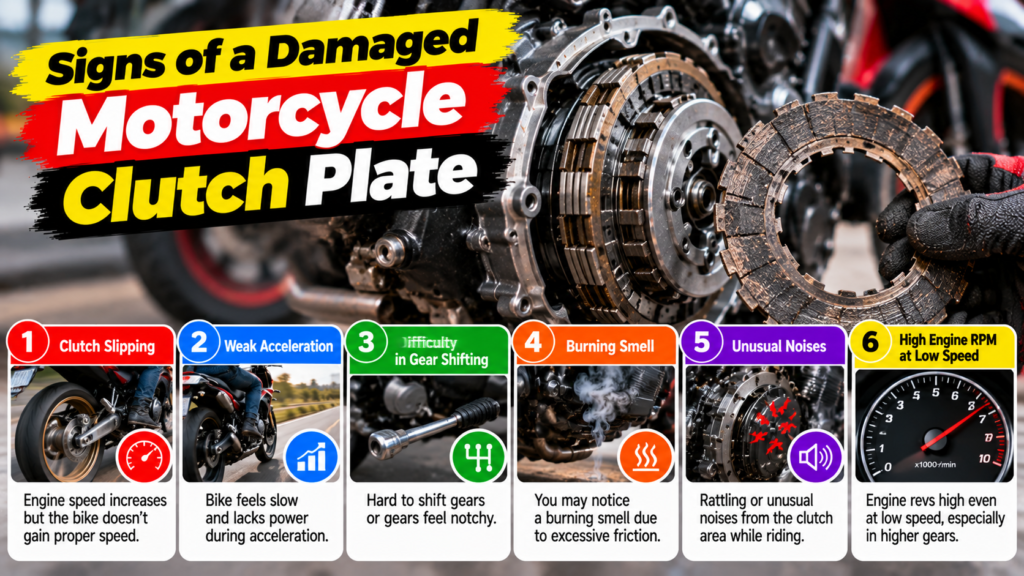
5. Poor Acceleration and Loss of Power Transfer
A motorcycle may struggle to accelerate if the clutch cannot transfer engine power effectively.
The engine may sound as though it is working harder, while the motorcycle responds slowly to throttle input.
This problem is especially noticeable when carrying a heavy load or climbing an incline.
Worn friction plates can contribute to this condition, but other issues may produce similar symptoms.
A dirty air filter, fuel system problem, worn spark plug, or engine compression issue can also reduce acceleration.
The difference is that clutch slipping often causes engine speed to rise without a proportional increase in road speed.
If you notice this pattern, have the clutch and engine performance checked before purchasing replacement parts.
6. Clutch Lever Feels Different
Changes in clutch lever feel can indicate a problem with the clutch system.
The lever may feel unusually loose, excessively stiff, or inconsistent when pulled.
Possible causes include incorrect cable adjustment, a damaged clutch cable, worn release mechanism components, or problems inside the clutch assembly.
On motorcycles with hydraulic clutches, low fluid, leaks, or air in the hydraulic system may also affect lever operation.
Clutch plates are not the only components that can cause these symptoms, so inspect the entire operating system.
Follow the manufacturer’s recommended free play and adjustment procedure.
If the clutch lever becomes difficult to operate or fails to return properly, arrange repairs before continuing to ride.
7. Unusual Noise From the Clutch Area
Unusual noises can sometimes indicate wear or damage in the clutch assembly.
You may hear rattling, grinding, or other unfamiliar sounds when pulling or releasing the clutch lever.
Possible causes include worn clutch components, a damaged clutch basket, loose parts, or problems with the release mechanism.
However, some motorcycles produce normal clutch related sounds, and noise alone does not confirm that the plates are damaged.
Pay attention to whether the sound changes when the clutch lever is operated or when the transmission is placed in gear.
If the noise is new, loud, or accompanied by difficult shifting, slipping, or vibration, have the clutch inspected.
Avoid continuing to ride if the noise suggests a serious mechanical failure.
8. Excessive Clutch Free Play or Incorrect Adjustment
Clutch free play is the small amount of movement available at the clutch lever before the mechanism begins operating.
The correct amount varies by motorcycle model and clutch design.
If free play is too small, the clutch may not engage fully when the lever is released. This can contribute to slipping and excessive heat.
If free play is too large, the clutch may not disengage completely when the lever is pulled. This can make gear changes difficult.
Incorrect adjustment does not necessarily mean the clutch plates are damaged.
Before replacing the clutch, check the adjustment procedure in the owner’s manual.
If correct adjustment does not resolve the problem, other components may require inspection.
9. Metal Particles or Contaminated Engine Oil
Some clutch wear material can enter the engine oil in motorcycles that use a shared lubrication system.
However, a small amount of normal wear material is different from unusual quantities of metal debris.
If you notice excessive metallic particles during an oil change or experience clutch problems at the same time, further inspection may be necessary.
Not every particle indicates clutch damage. Engine bearings, gears, and other components can also contribute metal debris to the oil.
Use the correct oil specification and follow the manufacturer’s maintenance schedule.
If substantial metal debris is found, avoid guessing the cause. A mechanic can inspect the oil filter, strainer, clutch assembly, and other internal components.
Main Causes of Motorcycle Clutch Plate Damage
Several factors can contribute to clutch plate wear.
Normal Wear
Clutch friction plates gradually wear as they transfer power during normal operation. Replacement may eventually be necessary.
Incorrect Riding Habits
Holding the clutch partly engaged for long periods can generate excessive heat and accelerate wear.
Heavy Loads and Repeated Hard Starts
Frequent hard acceleration, steep climbs, and heavy loads can increase clutch stress.
Incorrect Engine Oil
Some motorcycles use a wet clutch that operates in engine oil. Oil that does not meet the required motorcycle specification may affect clutch performance.
Always check the owner’s manual, particularly when the motorcycle requires oil meeting specific wet clutch performance standards.
Mechanical Problems
Damaged clutch springs, warped steel plates, a worn clutch basket, or incorrect adjustment can contribute to poor clutch operation.
Identifying the actual cause is important because replacing friction plates alone may not solve a problem caused by another component.
How to Maintain Motorcycle Clutch Plates
Regular maintenance and sensible riding habits can help extend clutch life.
Use the engine oil specified by the manufacturer and change it at the recommended interval.
Check clutch lever free play regularly and adjust it according to the service manual.
Avoid resting your hand on the clutch lever unnecessarily while riding. When waiting at a traffic signal, use the recommended stopping technique rather than keeping the clutch partly engaged for extended periods.
Release the clutch smoothly when starting and avoid excessive throttle while slipping the clutch.
If you notice repeated slipping, unusual noises, or difficulty changing gears, arrange an inspection early.
A mechanic can measure clutch plate thickness, inspect the steel plates, check the springs, and determine whether replacement is required.
When Should You Replace Motorcycle Clutch Plates?
Clutch plates should be replaced when inspection shows that they are worn beyond the manufacturer’s limits or damaged in a way that prevents proper operation.
The replacement interval depends on motorcycle design, riding conditions, maintenance, and rider habits.
Some motorcycles can operate for a long time on their original clutch plates, while others may require earlier servicing under demanding conditions.
Do not replace clutch plates based only on mileage or a single symptom. Correct diagnosis helps avoid unnecessary expenses.
If replacement is necessary, use compatible parts and inspect the other clutch components according to the service manual.
Conclusion
A damaged motorcycle clutch plate can cause slipping, difficult gear changes, jerking during engagement, unusual smells, poor power transfer, and changes in clutch lever feel.
From my point of view, recognizing these symptoms early is the best way to prevent a small clutch problem from becoming a larger repair.
However, clutch symptoms can also result from incorrect adjustment, damaged cables, unsuitable oil, or worn components elsewhere in the transmission system.
Follow the manufacturer’s maintenance schedule, use the correct engine oil, and develop smooth riding habits.
When symptoms persist, have the clutch assembly inspected before replacing parts. Proper maintenance can help maintain smooth gear changes, reliable power transfer, and a better riding experience.