Buying motorcycle spare parts requires attention because the quality of a component can affect the motorcycle’s performance, reliability, and safety. A part may look new and attractive but still have poor manufacturing quality, incorrect dimensions, or signs of damage. Checking a component before purchasing it can help you avoid unnecessary expenses and fitting problems.
Whether you are buying engine parts, brake pads, cables, chains, filters, or electrical components, it is important to know what to inspect. The checking process may differ depending on the part, but several basic principles apply to most motorcycle spare parts.
In this article, I will explain how to inspect motorcycle spare parts before buying them and what details you should confirm with the seller.
Confirm That the Part Fits Your Motorcycle
The first thing to check is compatibility. Motorcycle manufacturers use different designs and specifications, so a component that fits one model may not fit another.
Before visiting a shop or ordering online, identify your motorcycle’s make, model, engine capacity, and manufacturing year. Use this information to compare the replacement part with the specifications in the owner’s manual or official parts catalogue.
If the old part is available, take it with you when visiting a parts shop. Comparing the old and new components can help you notice differences in size, shape, mounting points, and connections.
However, visual comparison alone is not always enough. Internal components may look similar but have different tolerances or specifications. Confirm compatibility using the correct part number whenever possible.
Inspect the Physical Condition
If you are buying a physical component from a shop, examine it carefully before paying. Look for cracks, dents, scratches in important working areas, corrosion, bent sections, damaged threads, and loose fittings.
For example, a metal bracket should not have unexpected bends or cracks. A cable should not have a damaged outer covering, and a chain should not show signs of corrosion or stiff links when it is new.
Rubber parts such as seals and hoses should not have visible cuts, cracks, or deterioration. Plastic components should not have broken clips or damaged mounting tabs.
Some minor marks may result from packaging or handling, but any damage that could affect fitment or safe operation should be discussed with the seller before purchase.
Check the Packaging and Labels
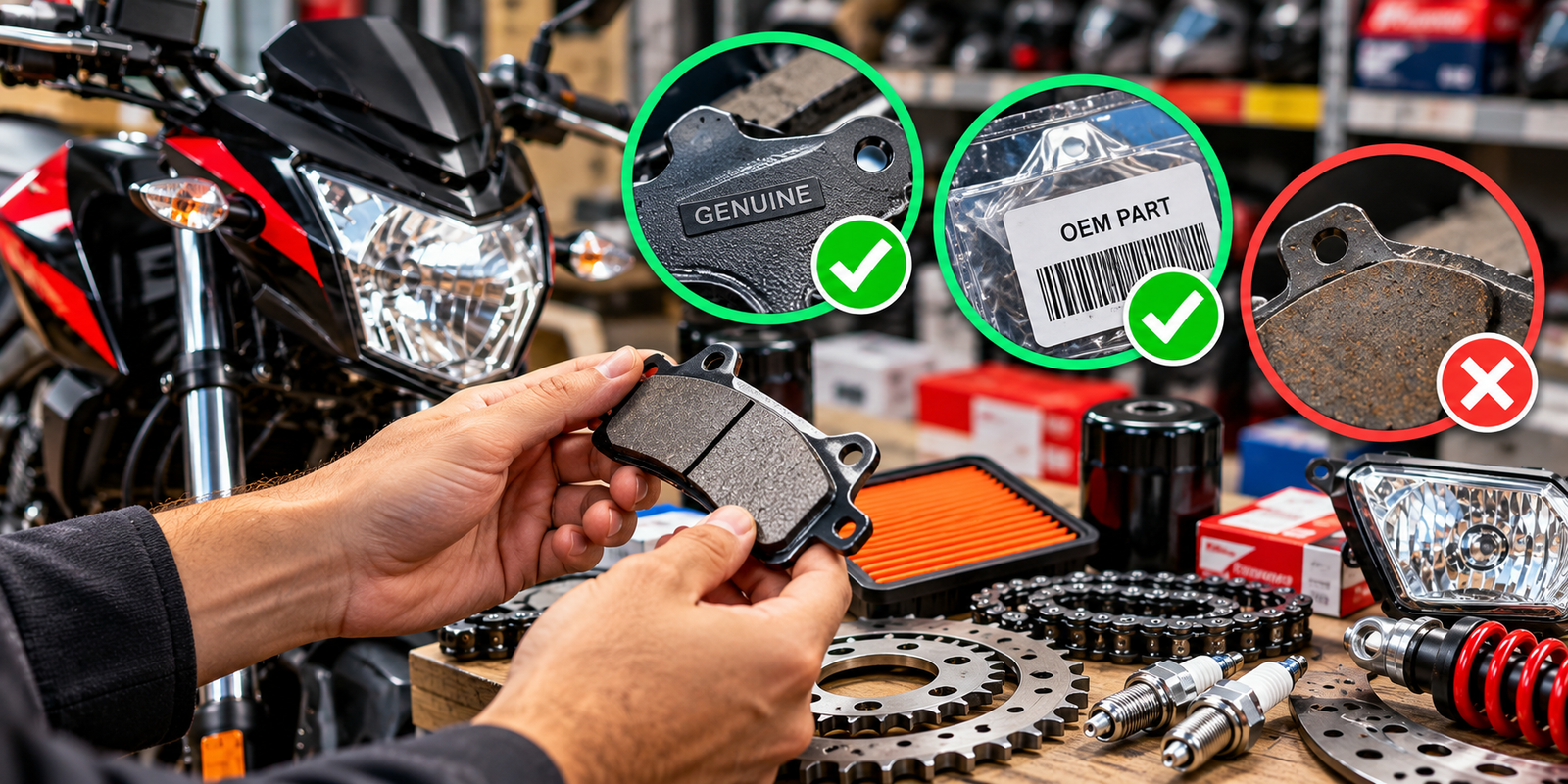
Packaging can provide useful information about the product. Check whether the box or package identifies the manufacturer, product name, part number, and any relevant specifications.
Compare these details with the information listed by the seller or manufacturer. The label should be consistent with the component inside the package.
Poor packaging alone does not prove that a part is fake, and genuine parts can sometimes have packaging changes between production batches or markets. However, spelling errors, inconsistent labels, missing identification, or suspicious seals should encourage you to ask more questions.
For branded parts, use the manufacturer’s official verification method if one is available. Do not assume that a logo or hologram automatically proves authenticity because counterfeit products can imitate these features.
Look for the Manufacturer’s Information
The manufacturer matters because different companies can produce components with different levels of quality control.
Research the brand before buying, especially if you are unfamiliar with it. Check whether the company provides product specifications, installation instructions, warranty details, or an official product catalogue.
If the seller claims that a part is genuine or OEM, ask what supports that claim. An invoice from an authorized seller or a verifiable part number may help establish its origin.
Be cautious when a seller makes broad claims such as “best quality” without providing useful information about the product’s specifications or manufacturer.
Compare the Part Number and Specifications
Part numbers are useful when identifying exact replacements. If a number is printed on the old part, compare it with the replacement or verify it in the manufacturer’s catalogue.
Also check the specifications that matter for the component.
For a motorcycle battery, review its dimensions, terminal arrangement, voltage, and required capacity. For a spark plug, confirm the specified plug type, thread dimensions, heat range, and reach. For a chain, verify the required size and compatibility with the sprockets.
When buying a brake disc or brake pads, check the exact application and dimensions. For electrical parts, verify the connector design and electrical ratings.
Never assume that a component is suitable simply because it is advertised as fitting a similar motorcycle.
Check for Signs of Counterfeit Parts
Counterfeit motorcycle parts may imitate genuine products through copied logos, packaging, and labels. Some may look convincing, making it difficult to identify them through appearance alone.
Warning signs can include unusually low prices, inconsistent branding, poor finishing, missing product identification, and sellers who cannot explain where the product came from.
Check the seller’s reputation and look for official purchasing channels when possible. If a brand offers a serial number or authentication system, follow the official verification process.
Avoid relying entirely on online photographs or packaging. Product authenticity is better assessed through a combination of seller credibility, documentation, manufacturer information, and product inspection.

Ask About the Warranty
Before purchasing, ask whether the spare part includes a warranty. The warranty may cover manufacturing defects but exclude damage caused by incorrect installation, misuse, normal wear, or unsuitable operating conditions.
Read the conditions instead of relying only on a verbal promise. Ask how long the warranty lasts, what documents are required, and where a defective component must be returned.
Keep the purchase invoice and any warranty documents. These may be necessary if the product fails or a dispute arises.
For inexpensive consumable parts, the warranty may be limited or unavailable, so compare the price with the seller’s stated return conditions.
Understand the Return and Exchange Policy
Even careful buyers can occasionally purchase the wrong part. A clear return policy can make this situation easier to manage.
Before paying, find out whether the seller accepts returns when a component does not fit. Ask whether the packaging must remain unopened and whether installation marks make the part ineligible for return.
For online purchases, read the written policy and check the procedure for reporting damaged or incorrect products. Photograph the package and component when it arrives if you notice a problem.
Do not install a questionable part merely to test whether it fits, particularly if doing so could damage the component or affect your right to return it.
Inspect Different Parts According to Their Type
Some components need additional checks.
Engine parts: Inspect for cracks, damaged threads, corrosion, and signs of poor machining. Internal engine parts may require precise measurements and professional inspection before installation.
Brake parts: Verify the exact specification and application. Do not use brake components with cracks, damage, contamination, or uncertain suitability.
Chains and sprockets: Confirm the correct size, type, and compatibility. Check that the new parts are free from corrosion or visible damage.
Cables: Check the outer casing, inner wire, end fittings, length, and adjustment range. The cable should match the motorcycle’s routing and controls.
Electrical components: Inspect connectors, wiring, insulation, and terminals. Verify voltage and other electrical specifications where applicable.
Filters: Confirm the correct part number, dimensions, sealing surface, and application. A poorly fitting filter may not provide the intended protection.
These checks help you focus on the features that matter most for each component.
Be Careful With Very Cheap Parts
A low price may be attractive, particularly when you need several replacement components. However, price alone does not tell you whether a part is reliable.
Compare the product with alternatives from established manufacturers. Consider its specifications, warranty, expected service life, and the reputation of the seller.
A cheaper part from a reputable manufacturer may be a reasonable option, but an unverified component with no clear specifications can create greater costs later.
For brakes, steering, tyres, and other safety related components, choose products with verified suitability and quality.
Keep Your Purchase Records
After buying a spare part, keep the invoice, packaging, part number, and warranty information. These records can help if you need to order the same component again or request a replacement.
You can also maintain a simple record of important replacement dates. This makes it easier to track maintenance and identify recurring problems.
If a mechanic installs the part, ask for the product details to be included in the service record.
Conclusion
Checking motorcycle spare parts before buying is a practical way to protect your money and your motorcycle. Confirm compatibility, inspect physical condition, compare part numbers, research the manufacturer, and review the seller’s warranty and return policy.
Pay particular attention to brake, steering, engine, and electrical components because incorrect or defective parts can cause serious problems. When you cannot verify a part’s quality or suitability, ask a qualified mechanic or authorized dealer for assistance.
A careful inspection before purchase can help you choose a suitable component and avoid many common problems associated with motorcycle repairs.