Keeping a few essential motorcycle spare parts at home can make routine maintenance easier and help reduce delays when a small component needs replacement. Some parts wear out through normal use, while others may become damaged because of road conditions, age, or regular operation.
However, it is not necessary to buy every spare part in advance. The most useful items depend on your motorcycle model, riding habits, local parts availability, and the maintenance you can safely perform yourself.
In my view, a practical home spare parts collection should focus on commonly replaced components that are easy to identify, store, and use when needed. In this article, I will explain which motorcycle spare parts may be worth keeping at home and how to choose them.
Why Keep Motorcycle Spare Parts at Home?
Having suitable replacement parts available can make routine maintenance more convenient. If a commonly used component reaches the end of its service life, you may already have the correct replacement ready.
It can also help riders in areas where motorcycle parts shops are not nearby or where specific models have limited local availability.
However, spare parts should be purchased carefully. Buying components that are incompatible, storing them incorrectly, or allowing them to remain unused for too long can waste money.
Start with the maintenance schedule in your owner’s manual and identify the parts that your motorcycle uses most frequently.
1. Spark Plugs
A spark plug is an important engine component in motorcycles that use spark ignition. It produces the spark needed to ignite the air and fuel mixture inside the combustion chamber.
Spark plugs wear over time and may require replacement according to the manufacturer’s service schedule. Keeping one correct replacement plug at home can be useful if your motorcycle uses a common plug type and you are comfortable handling basic maintenance.
Before buying, check the specified part number, thread size, reach, heat range, and other requirements. Spark plugs that appear similar may have different specifications.
Store the plug in its original packaging in a clean, dry place. Protect the threads and electrode from impact or contamination.
2. Air Filter
The air filter helps prevent dust and other particles from entering the engine through the intake system. A dirty or damaged filter may affect airflow and engine operation.
Some motorcycles use disposable paper filters, while others use reusable foam or other filter designs. The correct cleaning or replacement method depends on the manufacturer’s instructions.
Keeping a spare air filter can be useful if your motorcycle is regularly ridden in dusty conditions or the correct filter is difficult to find locally.
Check the part number and make sure the filter fits the airbox properly. Store it in a clean, dry environment and avoid crushing the filter material.
3. Engine Oil Filter
Motorcycles equipped with a replaceable engine oil filter need the correct filter for the specific engine. The filter helps remove contaminants from the circulating oil.
If your motorcycle uses a replaceable filter and you perform scheduled oil changes yourself, keeping one suitable replacement may be convenient.
Confirm the exact filter specification and any required sealing components. Do not assume that filters with similar dimensions are interchangeable.
Store the filter in its original packaging and keep it away from moisture, dirt, and damaging pressure. Follow the manufacturer’s service schedule when replacing it.
4. Fuses
Fuses protect electrical circuits by interrupting current when the circuit experiences an excessive electrical load. A correctly rated spare fuse can be useful if a fuse fails.
Check your motorcycle’s owner’s manual to identify the correct fuse types and ratings. Keep only replacements that match the manufacturer’s specifications.
Never install a fuse with a higher rating simply because the correct one is unavailable. An incorrectly rated fuse may fail to provide the intended protection.
If the same fuse repeatedly blows, investigate the electrical fault instead of repeatedly replacing it. The problem may involve damaged wiring, a short circuit, or a faulty component.
5. Headlight and Indicator Bulbs
Some motorcycles use replaceable bulbs for headlights, indicators, or other lights, while others use integrated LED assemblies.
If your motorcycle uses replaceable bulbs, keeping a correct spare may be useful, especially when you ride regularly at night or travel long distances.
Check the bulb type, voltage, wattage, connector, and manufacturer specifications. Using a bulb with unsuitable electrical ratings can cause problems with the lighting system.
Store bulbs in their protective packaging and avoid touching the glass of halogen bulbs with bare fingers, because contamination can affect their service life.
For integrated LED systems, it may be more practical to identify a reliable replacement supplier rather than purchasing a complete assembly without knowing whether it is needed.
6. Chain Lubricant and Cleaning Supplies
Chain lubricant is not a replacement spare part, but it is a useful motorcycle maintenance supply if your motorcycle uses a chain drive.
Choose a lubricant suitable for your chain type and follow the product instructions. Some motorcycles use sealed chains, so the cleaner and lubricant should be compatible with the chain’s seals.
A suitable chain brush and clean cloth can also help with routine maintenance.
Keep these products sealed and stored according to their labels. Avoid placing them near open flames, excessive heat, or areas accessible to children.
7. Clutch and Throttle Cables
Clutch and throttle cables are common mechanical components on motorcycles that use cable operated controls. They can wear, corrode, or become damaged over time.
Keeping a spare cable may be worthwhile if your motorcycle is older, the correct cable is difficult to obtain, or you frequently travel in areas with limited repair services.
However, cables must match the exact model. Check the part number, length, end fittings, routing, and adjustment range.
A throttle cable that is incorrectly fitted or adjusted can create a serious safety risk. If you replace a cable, make sure the throttle returns correctly throughout the full handlebar movement and have a mechanic check it if you are uncertain.
8. Nuts, Bolts, and Fasteners
Small fasteners may be useful for certain maintenance tasks, but motorcycle fasteners are not all interchangeable.
Different parts may require specific thread sizes, lengths, grades, washers, locking features, and tightening torque.
Instead of keeping a random collection of bolts, identify any model specific fasteners that are commonly needed for routine servicing. Store them in labelled containers to avoid confusion.
Never replace an important fastener with a similar looking bolt unless it meets the required specification.
9. Tubes or Puncture Repair Supplies
Whether you should keep a spare inner tube or puncture repair supplies depends on your motorcycle’s tyre design and the type of riding you do.
Some motorcycles use tube type tyres, while others use tubeless tyres. The repair method and suitable supplies differ between these systems.
If you use tube type tyres, a correctly sized spare tube may be useful for longer journeys or remote riding, provided you know how to replace it safely.
For tubeless tyres, a suitable repair kit may be convenient for certain punctures, but not every tyre injury can be repaired. Follow tyre manufacturer guidance and seek professional inspection when necessary.
Never treat a temporary roadside repair as a substitute for replacing a tyre that is unsafe or damaged beyond repair.
10. A Spare Chain or Related Drivetrain Parts
For riders who travel long distances or use a motorcycle with a chain drive, it may be useful to know which chain and sprocket specifications the motorcycle requires.
However, keeping a complete spare chain at home is not necessary for every rider. Chain replacement depends on wear, maintenance, riding conditions, and the manufacturer’s service limits.
If you decide to keep a replacement, verify the chain size, length, type, and compatibility with the sprockets. Store it in its original packaging and protect it from moisture and corrosion.
Do not install a chain or connecting link unless it is compatible with the motorcycle and fitted using the correct procedure.
How to Choose Which Parts to Keep
Start by reviewing the motorcycle’s service schedule. Identify consumable parts that need periodic replacement, such as filters and spark plugs, and consider how frequently you ride.
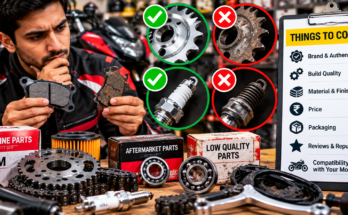
Next, think about availability. If a part is easy to buy locally, there may be little reason to store it in advance. If a specific component takes a long time to obtain, keeping one correct replacement may be sensible.
Consider your maintenance skills as well. Having a part available does not mean it is safe to install without the correct tools or knowledge.
Prioritize parts that are useful, compatible, easy to store, and likely to be needed within a reasonable period.
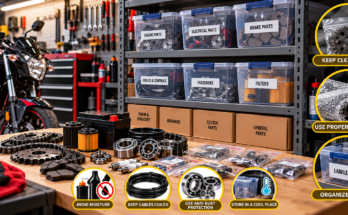
Store Spare Parts Properly
Keep spare parts in their original packaging whenever possible. Use a clean, dry storage area away from direct sunlight, excessive heat, moisture, and corrosive chemicals.
Label items with their part numbers and the motorcycle model they fit. Store small components in separate containers to prevent mixing.
Check stored parts occasionally for rust, damaged packaging, leaks, or deterioration. Rubber components and some electrical parts can degrade if exposed to unsuitable conditions.
Follow the manufacturer’s storage instructions for batteries, lubricants, and other products that have specific handling requirements.
What You Should Not Store Without a Reason
Large engine components, expensive electronic modules, complete brake assemblies, and model specific body panels can be costly to store unnecessarily.
Unless you have a clear maintenance need or the part is difficult to obtain, it may be better to purchase these components only when required.
Safety critical parts should also be selected carefully. Never keep an unknown or unverified component simply because it was inexpensive.
Conclusion
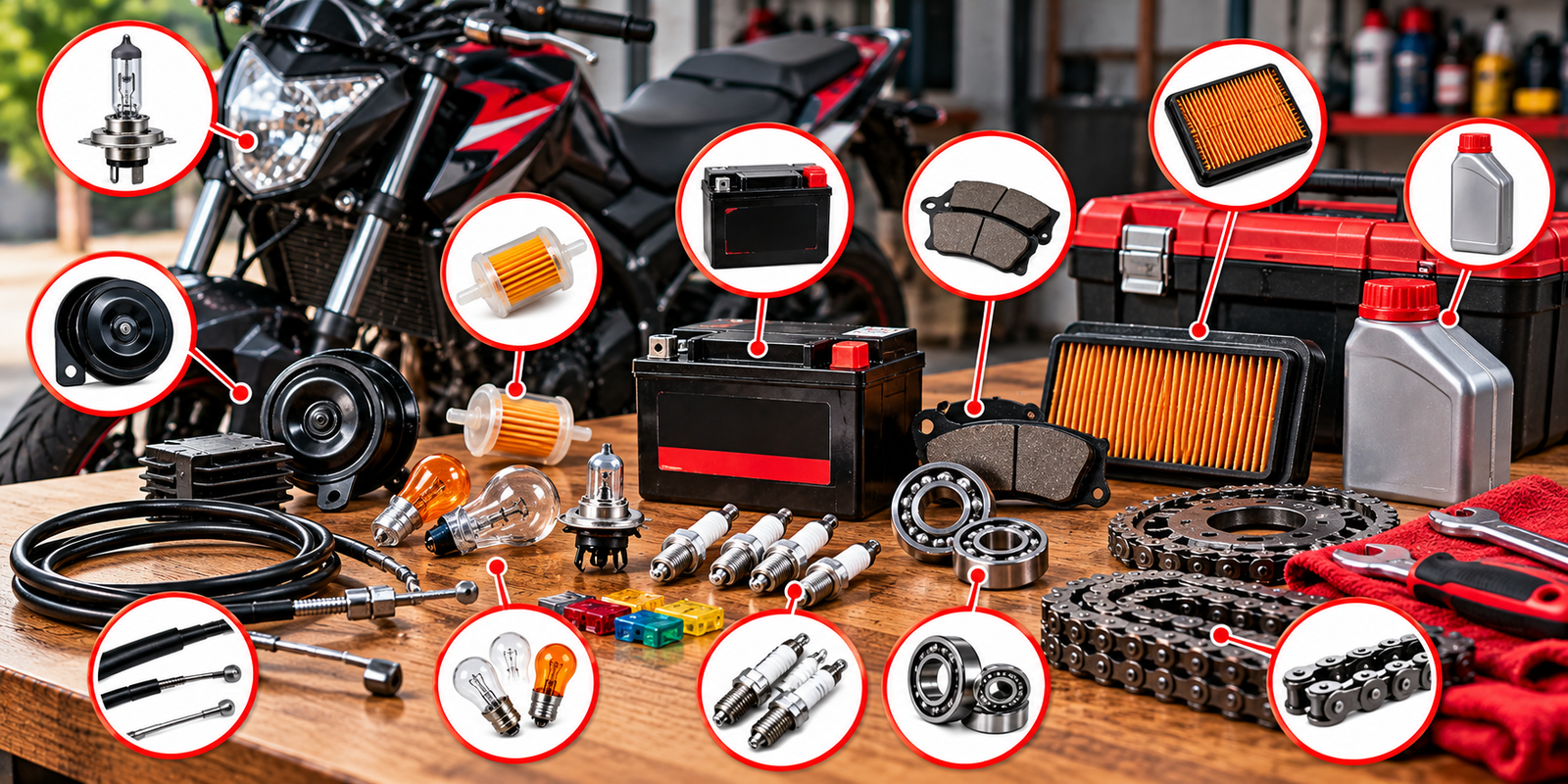
A small, well chosen motorcycle spare parts collection can make maintenance more convenient. Depending on your motorcycle, useful items may include a spark plug, air filter, oil filter, correctly rated fuses, suitable bulbs, clutch or throttle cables, and appropriate tyre repair supplies.
The best selection depends on your motorcycle model, service schedule, riding conditions, and access to local parts suppliers. Confirm every part’s specifications before buying and store it in a clean, dry, labelled location.
Keeping a few suitable items at home can save time, but regular inspection and correct maintenance remain more important than building a large collection of spare parts.