Motorcycle cables play an important role in controlling and operating different parts of a bike. Depending on the model, cables may be used for the throttle, clutch, brakes, choke, or other mechanical controls. These cables are exposed to movement, friction, dirt, moisture, and regular wear.
A cable may continue working even after its condition begins to deteriorate. However, ignoring warning signs can lead to difficult operation or sudden failure. A damaged throttle cable, for example, may interfere with reliable throttle control, while a failing clutch cable can make gear changes difficult.
Knowing when to replace motorcycle cables helps maintain proper control and reduces the risk of unexpected problems. In this article, I will explain the signs of cable wear, common causes of damage, and the right time to arrange a replacement.
Understand the Function of Motorcycle Cables
Motorcycle cables transfer movement from a control lever or grip to a mechanical component. A typical cable consists of an inner wire that moves inside an outer housing. The ends connect to the control and the component being operated.
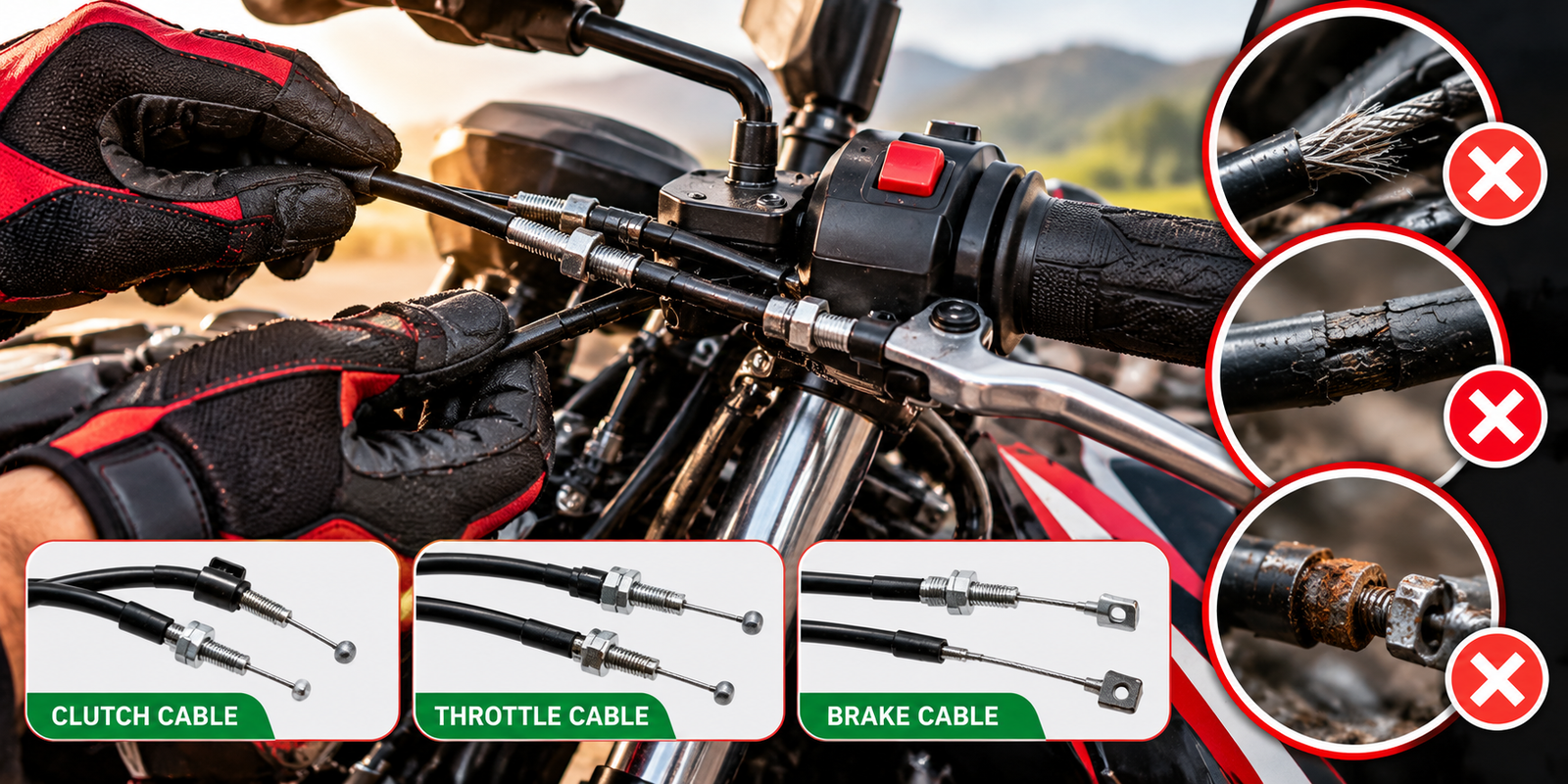
A throttle cable helps control the throttle mechanism. A clutch cable transfers movement from the clutch lever to the clutch release mechanism on motorcycles that use a cable operated clutch. Some older or simpler motorcycles may also use cables for other functions.
Not every motorcycle uses the same cable system. Many modern motorcycles have hydraulic clutches or hydraulic brakes instead of cable operated systems. Therefore, it is important to identify which controls on your motorcycle actually use cables.
Signs That a Motorcycle Cable Needs Replacement
The most important reason to replace a cable is evidence that it is damaged, excessively worn, or no longer operating correctly.
Frayed Inner Wire
One of the clearest warning signs is a frayed inner wire. Small wire strands may begin to break near the lever, adjuster, or cable end, where repeated movement creates stress.
If you notice broken strands, do not ignore them. A frayed cable may continue functioning temporarily, but the remaining strands can fail under load.
For a throttle or clutch cable, replacement is generally the safer choice when fraying is discovered. Do not attempt to repair a damaged inner wire with tape, wire, or makeshift attachments.
Stiff or Difficult Movement
A cable that moves smoothly should allow its control to operate without unusual resistance. If the throttle grip becomes difficult to turn or a clutch lever feels noticeably heavier, inspect the cable system.
Possible causes include corrosion, damaged housing, contamination, incorrect routing, tight bends, or internal wear. The problem may sometimes be caused by another component, so a full inspection is important.
If cleaning, lubrication where appropriate, or correcting the routing does not restore proper movement, replacement may be necessary.
Cracked or Damaged Outer Housing
The outer housing protects the inner cable and helps guide its movement. Cracks, splits, crushed sections, or damaged end fittings can affect operation.
A damaged housing may allow moisture and dirt to enter, increasing the risk of corrosion and friction. It may also change the way the cable moves when the handlebars turn.
Inspect the entire visible length of the housing, including areas near the handlebar, frame, engine, and adjustment points. If the housing is badly damaged, replace the cable assembly rather than relying on a temporary repair.
Rust or Corrosion
Rust on an exposed inner wire or near the cable ends can indicate that moisture has entered the assembly. Corrosion may increase friction and weaken the cable.
A small amount of surface dirt is not necessarily a reason for replacement, but visible corrosion combined with stiffness, fraying, or irregular movement deserves attention.
If corrosion has damaged the wire or internal movement remains rough, replacing the cable is usually the appropriate solution.
Unusual Throttle Behavior
The throttle should return smoothly and reliably according to the motorcycle manufacturer’s design. If the throttle sticks, returns slowly, or behaves inconsistently, investigate the problem before riding.
A cable may be responsible, but incorrect adjustment, poor routing, damaged throttle grip components, or a problem with the throttle body or carburetor may also be involved.
A throttle that does not return correctly is a serious safety concern. Do not continue riding until the cause has been identified and the system operates correctly.
Changes in Clutch Lever Feel
A clutch cable may become harder to pull, rough during operation, or inconsistent in its movement. The lever may also have too much or too little free play.
These symptoms can indicate cable wear, incorrect adjustment, or a problem with the clutch mechanism itself. Check the free play against the motorcycle’s service specifications.
If the cable is frayed, corroded, or damaged, replace it. If the cable is in good condition but the clutch still behaves abnormally, have the clutch system inspected.
Replace a Cable When It Is Physically Damaged
Visible damage is a stronger reason for replacement than age alone. A cable may last for years under suitable conditions, while another may wear quickly because of frequent use, moisture, poor routing, or inadequate maintenance.
Replace a cable if its inner wire is frayed, its housing is badly cracked or crushed, its fittings are damaged, or it cannot move smoothly after the cause of resistance has been addressed.
Do not wait for a damaged cable to snap completely. Sudden failure can leave you unable to operate the affected control as intended.
Consider the Motorcycle’s Age and Riding Conditions
Older motorcycles may have original cables that have experienced years of movement and exposure to the environment. However, there is no universal replacement interval that applies to every cable and motorcycle.
Use the service schedule specified by the manufacturer and consider the condition of the cable during routine maintenance.
Motorcycles used in rain, dusty environments, coastal areas, or heavy traffic may experience different wear patterns from bikes used occasionally in dry conditions. Frequent steering movement and tight cable routing can also contribute to wear.
Inspect cables more closely if the motorcycle has been stored for a long time or has developed stiff controls after storage.
Check Cable Routing and Adjustment
Not every cable problem requires immediate replacement. A cable may feel tight because it is routed incorrectly, bent sharply, trapped beneath another component, or adjusted outside the recommended range.
For example, throttle operation can change when the handlebars are turned if the cable routing is incorrect. Clutch lever free play can also change if adjustment is not set properly.
Follow the manufacturer’s routing and adjustment instructions. If you cannot identify the cause, ask a qualified mechanic to inspect the system.
However, adjustment should never be used to hide fraying, corrosion, or structural damage.
Should You Replace Cables in Pairs?
Some motorcycles use separate cables for related functions, such as push and pull throttle cables. If one cable is worn, inspect the other cable and the complete control system carefully.
Whether both cables should be replaced depends on the motorcycle design, their condition, and the manufacturer’s recommendations. Replacing a related cable at the same time may be sensible when both have similar age and wear, but it is not a universal requirement.
Always use the correct cable type and follow the recommended installation procedure.
Choose the Correct Replacement Cable
When replacement is needed, confirm the exact motorcycle model, manufacturing year, and cable type. Check the length, end fittings, adjustment range, housing design, and routing requirements.
A cable that is too short may become tight when the handlebars turn. One that is too long may interfere with nearby components or route incorrectly.
Buy from a reputable supplier and verify the part number whenever possible. Avoid makeshift repairs or cables that have not been designed for your motorcycle.
After installation, the control must operate smoothly throughout its full range. For a throttle cable, verify reliable return at different handlebar positions before riding. Clutch free play should also be set to the manufacturer’s specification.
If you are unfamiliar with cable replacement or adjustment, professional installation is a sensible option.
Conclusion
Motorcycle cables should be replaced when they show signs of fraying, corrosion, damaged housing, broken fittings, or persistent stiffness. Changes in throttle or clutch operation also deserve attention, although the cause may be somewhere else in the control system.
Inspect cables regularly, follow the service manual, and address problems before they lead to failure. Never continue riding with a throttle that sticks or a control cable that is visibly damaged.
Choosing the correct replacement and ensuring proper installation will help keep your motorcycle controls working smoothly and reliably.